
Do you ever find yourself lying down on your pillow, but your mind won’t stop racing?[1] You can't fall asleep, you roll over, replaying conversations, stressing about the tasks you need to do tomorrow, scrolling through your social media feed in a loop. Does this sound familiar? For many, it's an all-too-frequent occurrence, and ironically, the more we desire sleep, the more elusive it becomes. Sleep used to feel like a passive activity, something we can simply press a button for, but in today's anxious world, it's a skill that requires active practice.
Feeling this way isn't your fault; it's a sign that your nervous system is working too hard. But what if you could tap into the restorative slumber your mind and body need without any invasive medication? What if there was a way to ease yourself into truly deep sleep by cultivating a nightly ritual? The more mindful you are about how you enter this space, the more you can effectively prepare your mind and body for a restorative night's sleep.
Why Bedtime Ritual Works (Science-Backed)
Your mind and body are in sync. The sympathetic nervous system, or "fight or flight", is running through our bodies each day to keep us alert, engaged, and fighting life's challenges[2]. But we need to transition to the parasympathetic nervous system by the time night falls. This transition is aided by rituals before bed.
Rituals or routines are common triggers in the brain to regulate circadian rhythm (the biological clock of the body)[3] and lower cortisol levels, preventing a restless night's sleep when our minds are too active from the patterns of the day[4]. By engaging in a series of intentional, calming activities, you help transition your body from an aware state into a conscious state of extreme rest to pave the way for a better quality of sleep.
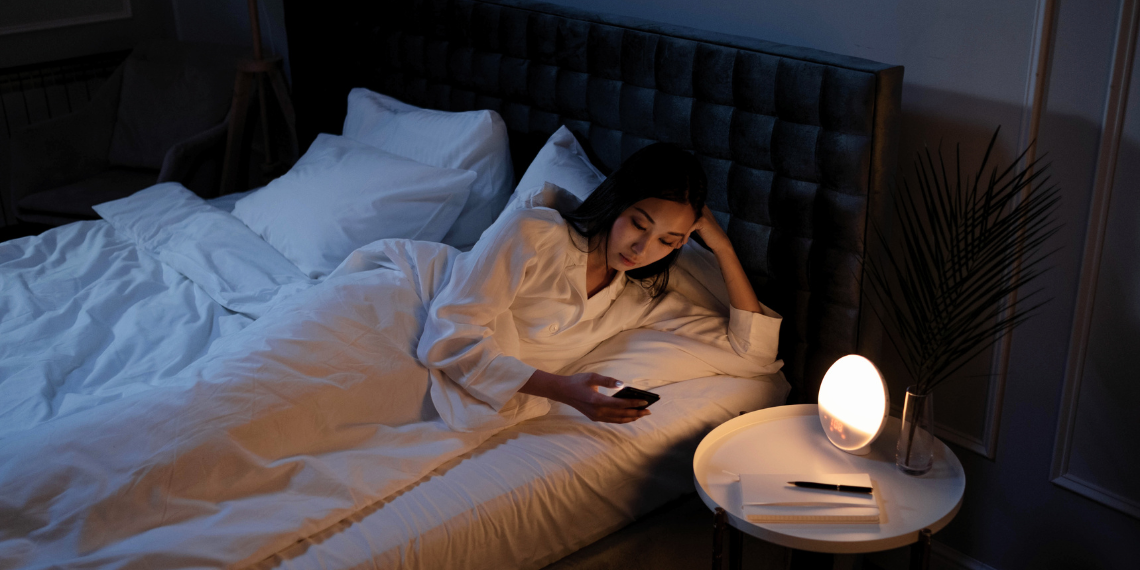
Here are six holistic rituals you can implement in your bedtime routine:
1. Ditch the Blue Light
This is no doubt the most important step in today’s world: a no-screen policy for at least 60 minutes before bed. Blue light is similar to daylight and tricks our brains into believing it is daytime. Ditching the blue light inhibits the release of melatonin, the hormone that signals our bodies that it's time for sleep[5].
Rather than endlessly scrolling, let this hour be used to wind down naturally. Listen to a podcast, read a book, or just sit in quiet so you can transition into a state of rest.
2. Sipping the Tea
A soothing cup of warm herbal tea can be a great way to signal your body to relax. Sedative and muscle-relaxant natural qualities are found in most herbs that can help you relax and prepare for rest.
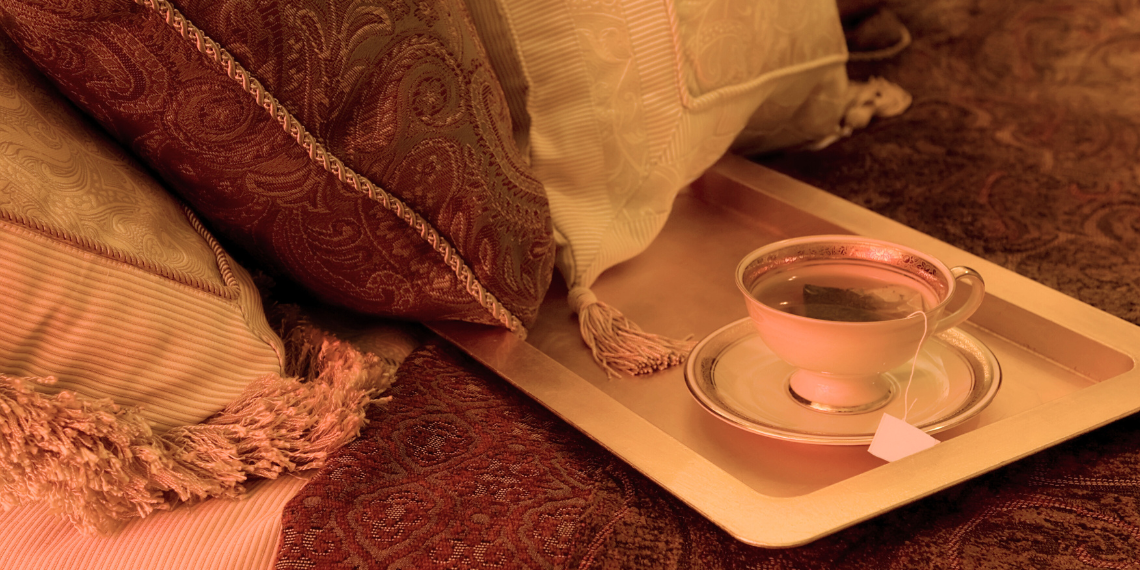
Go for teas that include:
- Chamomile: With its soothing sedative action, it holds an antioxidant called “Apigenin” that binds itself to receptors in your brain to inhibit anxiety and induce sleep[6][7].
- Valerian Root: A powerful root used to cure insomnia in many parts of the world. It is reported to enhance the levels of a neurotransmitter known as GABA, which tranquillises the nervous system[8][9].
- Passionflower: The herb has been used for decades to cure anxiety and sleeping disorders. Research has revealed that it enhances the quality of sleep and induces sleep quickly[10].
It is not just a sip of tea but the comforting warmth and the peaceful minutes of letting it seep in, a comforting sensory experience that guarantees sleep.
3. Mindful Movement
You don't need to do extensive exercise before bedtime. 10 minutes of mindful, gentle movement will release physical tension that will keep you from relaxing. When you tense up, it gets wedged in your neck, shoulders, and hips. Some simple stretches are a wonderful way to shift your body into a resting state. Try these simple poses in this article.
4. Journaling for Release
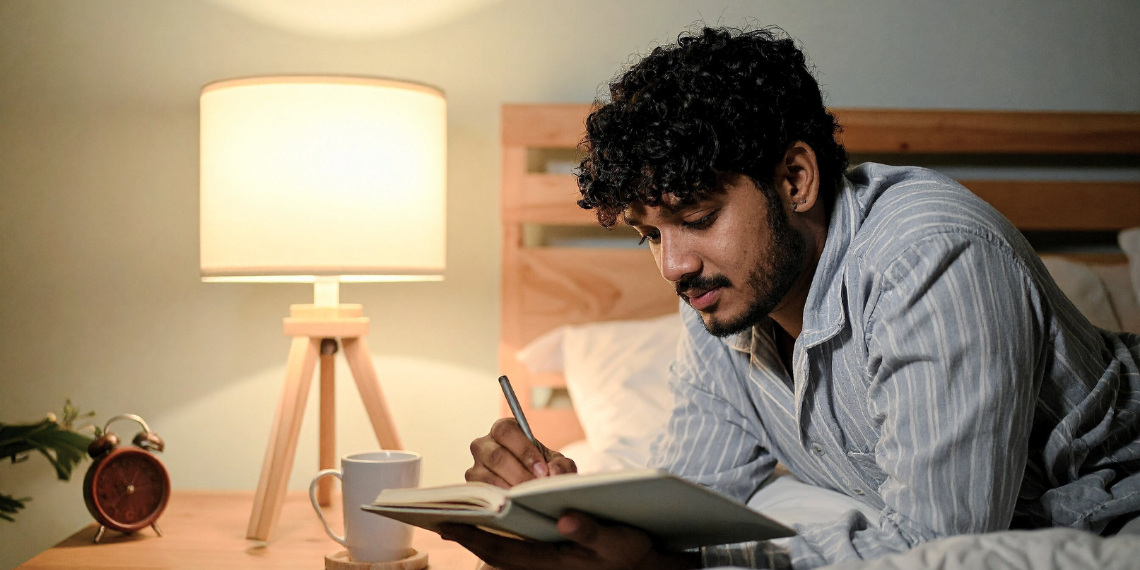
Trying to rest, but your head is full of endless thoughts and anxieties? A "brain dump" can be a lifesaver. Spend just 5-10 minutes scribbling in bed, and you can drain your invasive thoughts onto paper, leaving your mind calm and tidy[11].
No need to overthink, simply put down whatever pops into your head—your to-do list for tomorrow, day thoughts that didn't get finished, or concerns for tomorrow. The point isn't to write a great journal entry, but to clear the thoughts from your mind so that they won't bother you at night. Journaling is a built-in psychological reset button, making space in your head for a restful night.
5. The 4-7-8 Breathwork
Simple yet incredibly effective, this breathing exercise can immediately trigger your parasympathetic nervous system and send you off into relaxation mode. It's an exercise developed by Dr Andrew Weil[12], and it's an excellent way to combat stress and anxiety.
Follow these steps:
- Breathe in through your nose for 4 seconds
- Hold your breath for a count of 7 seconds
- Gently release your breath out fully through your mouth for 8 seconds
- Do these three or four repetitions in succession[13].
This particular breathing pattern is meant to slow your heart rate and soothe your mind, bringing you from a state of alertness to a place of relaxation[14].
6. Your Bedroom is Your Sanctuary
Your bedroom must be a place of peace and intimacy, not an office space or a playground. Some easy, thoughtful modifications to your space can actually make a real difference in how well you sleep.
Try these easy tips:
- Dim the light: As bedtime approaches, turning down the lights signals your brain that it's time to wind down.
- Control the Temperature: A near-unanimous consensus exists among sleep professionals to recommend a cool temperature of around 65°F (18.3°C) for optimal sleep[15].
- Use a Weighted Blanket: The gentle, steady pressure is like a comforting hug, quelling anxiety and causing the person to feel secure[16].
- Use a Sleep Soundscape: White noise, calming outdoors sounds, or soft music can cover up distracting sounds and create a constant aural environment that promotes sleep.
- Use Scent: Add some drops of essential oils to a diffuser or a warm bath before bed. A few fragrances that are very effective for sleep are Lavender, Bergamot, Cedarwood, and Sandalwood[17].
By preparing your space, you're not only making a cosy room, but a sanctuary that really assists your journey into a good night's rest.
Your Journey to Restful Nights
The best thing you can do for your overall health and well-being is to establish a nightly bedtime ritual. It doesn't have to be about doing all six rituals flawlessly every single night; it's about choosing and prioritising a few that work for you and sticking to those rituals. Consistency is what makes perfection!
References
1. Wisner W. Why Am I Having Racing Thoughts at Night? Verywellmind; 2024.
2. Parasympathetic Nervous System (PSNS). Cleveland Clinic; 2022.
3. Bryan L. Circadian Rhythm. Sleep Foundation; 2025.
4. How Improving Your Sleep Can Lower Cortisol. Body&Mind; [cited on 2025 Sep 29].
5. Blue in the Face: The Effects of Blue Light on Sleep. Society of Behavioral Medicine; 2025.
6. The Magic of Chamomile Tea: Apigenin For Sleep, Cancer, Immunity, and More. Luke Coutinho; 2024.
7. Chan K. I Drank Chamomile Tea Before Bed for a Week—Here's How It Affected My Sleep. Verywellmind; 2025.
8. Valerian Root for Sleep. Sleep Foundation; 2025.
9. Evidence supporting the use of: Valerian root For the body system: GABA. Caring Sunshine; 2025.
10. Benefits of Passionflower: How to Calm Anxiety. Dr. Jolene Brighten; 2024.
11. Mayer A. 4 Benefits of Journaling Before Bed. Early Bird; 2025.
12. Video: Breathing Exercises: 4-7-8 Breath. Andrew Weil; 2025.
13. How to use 4-7-8 breathing for anxiety. Medical News Today; 2024.
14. Effects of sleep deprivation and 4-7-8 breathing control on heart rate variability, blood pressure, blood glucose, and endothelial function in healthy young adults. Physiol Rep; 2022.
15. Best Temperature for Sleep. Sleep Foundation; 2025.
16. Weighted Blanket Benefits. Sleep Foundation; 2025.
17. Essential Oils For Sleep. FRANGIPANI; 2025.

Our purpose-driven editorial team has selected articles to share with our global community from thought leaders, commentators and subject matter experts in the traditional & complementary medicine sector from around the world. If you have any suggestions, comments or feedback, please contact us here.
Disclaimer: This Content has been developed from our generous global community and is intended for informational purposes only. This Content is not, nor is it intended to be, a substitute for professional medical advice, diagnosis, or treatment and should never be relied upon. Further, the personal views and experiences published are expressly those of the author, and do not represent the views or endorsement of SoulAdvisor through the act of publication on our site.
Similar articles in Sleep

Getting More Sleep Can Reduce Long-Term Health Risks
We all know how essential sleep is for our physical and cognitive health but the long-term impact of [...]

Are You Suffering From ‘COVID-Somnia?’
During this time of unprecedented global disruption, many people are finding that getting sufficient [...]

Blue Light And Daylight – The Sleep Conundrum
Blue light is essential for regulating our 24-hour sleep-wake cycle, or ‘circadian clock.’ It is wha [...]
Similar articles in Healthy Living

How to Create a Personalised Wellness Plan: Your Complete Guide to Holistic Health
In a world where there’s an overwhelming amount of wellness information, such as social media trends [...]

Coming Home to My Body: A Lesson I Needed
When I was reminded how deeply my body communicates with me—and how often I ignore it. After eating [...]

Healing and Hope: A Holistic Path to Addiction Recovery
Whenever we consider addiction recovery, whether it’s drug, alcohol, or even a destructive habit rec [...]

7 Yoga Practices For Detoxing
When I think of detox, I think of the body taking out the trash! I think of quitting alcohol, coffee [...]

Exercise Boosts Brain Power
Recently, I read the book Brain Rules by Dr. John Medina. It is a New York Times bestseller, and the [...]


Manual Lymph Drainage - What’s all the ‘buzz’ about?
Most massage modalities deal with musculoskeletal issues, however, Manual Lymphatic Drainage offers [...]


Food as Medicine: Reclaiming Health Through the Power of Nature
Reclaim your health with the ancient wisdom of "food as medicine." Discover how daily choices, mindf [...]

Dance Like Nobody's Watching
When I first heard this quote, my first reaction was: “Why?”

3 Ways Mental Health Impacts Your Physical Wellbeing
"Health is a state of complete physical, mental and social well-being, and not merely the absence of [...]

The Healing Power of Aromatherapy Bath
Water is such a nurturing element on our earth, be it the revitalised feeling you have after a swim [...]

Unlock Happiness and Creativity by Moving your Body
During winter we tend to retreat and keep ourselves more indoors and rugged up; yet there are studie [...]

Fascia: Understanding and Enhancing the Functionality of This Important Connective Tissue
Fascia, the body’s connective tissue network, supports muscles, bones, and organs while enabling mov [...]

Menopause: Ways To Reduce The Impact Of The Journey
If I told you the number one reason why most women suffer during menopause, would you do whatever it [...]

From Insanity To Clarity
A personal journey of recovery through chronic illness, the disease to please and being powerless ov [...]


Common back pain myths and how to overcome your pain
Debunk common back pain myths, promote staying active, explore non-surgical treatments, and emphasiz [...]


Fit Over 40: Your Guide to Health and Fitness
Welcome to the journey of becoming fit over 40! This guide is perfect for those who are interested i [...]

Dancing Meditation... Are You Rocking Your Groove?
Do you love to dance? I love to dance! Everywhere I go, I dance. It can be quite comical, but [...]


Revolutionising Wellness: A Holistic Expedition into Mind-Body Harmony
Ditching the Norm: Uncover the Path to Holistic Wellness. Dive into Kinesiology and Bio-Resonance fo [...]


Wisdom Gifted To Me Through My Naturopathic Practice
The face of the natural health and wellness industry has changed greatly over the last two decades.


Five Ways To Strengthen Your Gut Integrity
Keeping a healthy, strong gut lining is critical to good health.

Connecting With Your Inner Healer - Where True And Lasting Health Begins
During times of extreme stress and overwhelm related to debilitating symptoms, it can be challenging [...]

The Power of Breathwork : Balance, Healing and Radical Change in Your Life
Breath by breath let go of fear, expectation, anger, regret and frustration. With each passing da [...]


The Power Of Distance Kinesiology
Kinesiology is a rapidly growing field and now practised in 100 countries around the world. It’s est [...]

The Umbrella of Herbal Healing
It’s the oldest form of medicine on the planet. The healing properties of herbs have been accessed f [...]

What Are The Different Types of Vinyasa Yoga?
Yoga can benefit the body, mind and soul in so many unique ways. It helps you to better connect with [...]

Whole Food Living: Honour Yourself, Honour The Planet
A whole food diet is so much more than a healthy lifestyle choice. When you choose to eat a whole [...]


How Remote Energy Healing Works
The ancient practice of energy healing, based on the idea of being able to consciously direct a subt [...]

The History of Naturopathy
How did naturopathy start, and how is it beneficial to humans? Naturopathy has been in existence [...]

The Online Naturopath Experience
Like so many other complementary therapies, naturopaths have increasingly moved to virtual consultat [...]
The Rise of Online Yoga
The pandemic created endless opportunities for us to participate in health and fitness classes virtu [...]

Live Longer And Healthier By Doing These Five Things
In Australia, we are lucky to have of the best life expectancies in the world – as of 2018, we were [...]

How Eating Colourful Fruits And Vegetables Could Help Boost Memory
You may have heard of the term ‘eat the rainbow’, and it’s a term that exists because the phytochemi [...]

Leaky Gut: The High Impact Gut Problem With A Low Profile - PART 3
In part three of our gut series, we look at leaky gut. In parts one and two, we learned about small [...]

SIBO: The High Impact Gut Problem With A Low Profile - PART 2
In our last article on SIBO, we identified the key symptoms, diagnosis and treatments. We also spoke [...]

SIBO: The High Impact Gut Problem With A Low Profile - PART 1
When Hippocrates suggested that all disease starts in the gut, he was right. Half of the Australian [...]

How To Bring The Earth Inside To Repair Your Health
The pandemic has certainly proven to all of us that excessive time indoors can negatively impact our [...]

4 Ways to Influence Your Immune System
Our immune system is crucial to the state of our health. Interestingly, we can influence the state o [...]

How Beetroot Juice Can Bolster Healthy Ageing
Is a glass of beetroot juice part of your daily diet? A new study shows that drinking beetroot juice [...]
Getting More Sleep Can Reduce Long-Term Health Risks
We all know how essential sleep is for our physical and cognitive health but the long-term impact of [...]

4 Exercises To Try If You Have Back Pain
Chances are that you may have experienced back pain at some point in your life, given it is estimate [...]

Slow Ageing Naturally With Antioxidants Rich Diet
As women enter their 40s, not only do their hormones start to decline but the physical effects of fr [...]

Is Your Body Sending You Unusual Stress Signals?
A tight chest, shallow breathing and a clenched jaw are all tell-tale signs that the body is stresse [...]

Four Memory-Boosting Brain Hacks
The brain has a remarkable ability to forge new pathways by rewiring itself in response to new infor [...]

The Healing Properties Of Therapeutic Bathing For Chronic Pain
Chronic pain, poor sleep, muscle stiffness and extreme fatigue are just some of the debilitating con [...]

Want To Stop Chronic Disease In Its Tracks? Try This.
Reducing inflammation by eating better could cut our risk of developing certain chronic diseases so [...]

5 Ways To Fortify Your Immune System
Given we’ve spent the past 18 months dealing with the challenges of a pandemic, the word ‘immunity’ [...]

Are These Herbs On Your Longevity Menu?
Growing older is a natural part of life. With each passing year, we are motivated to support our hea [...]

Training Your Immune System: Here’s Your Checklist
The intricate network of cells, organs and chemicals that comprise the immune system do a remarkable [...]
Are You Suffering From ‘COVID-Somnia?’
During this time of unprecedented global disruption, many people are finding that getting sufficient [...]

The Art Of Taking Tea Mindfully
In a world filled with chaos and stress, it is important we find ways in our daily lives that can he [...]
Blue Light And Daylight – The Sleep Conundrum
Blue light is essential for regulating our 24-hour sleep-wake cycle, or ‘circadian clock.’ It is wha [...]

Collagen: Healthy Aging From The Inside Out
Collagen is known as the ultimate anti-aging elixir, and has long featured in masks, topicals and sp [...]

Belly Misbehaving? You May Need The FODMAP Diet
Is your belly misbehaving? You are not alone. Around 20% of Australians have Irritable Bowel Syndrom [...]


The Life-Giving Breath Of Qigong
The ancient Chinese practice of Qigong, based on the concept of amalgamating energetic and physiolog [...]

Food Of The Future
The idea that ‘happiness comes from within’ is something we have heard time and again. But now, scie [...]

Food Balance: How To Achieve Optimum pH Levels
You may have heard about acid/alkaline or pH balance on your health travels, but did you know that e [...]

Ease And Grace Through Stretch Therapy
Stretch Therapy is a term created by Kit Laughlin who created and formerly ran the Strength & Flexib [...]

Connecting With Your Feet
Have you ever wondered how a Reflexologist works and is able to ‘pick up’ certain imbalances or thin [...]

10 Creative Ways To Move Your Body & Lose Weight Without Even Knowing It
The movement of the body has numerous benefits. By moving your body you not only move the muscles an [...]

Overcoming Food Fear
Food fear is a strand of emotional eating which can have debilitating effects on your life. I know t [...]