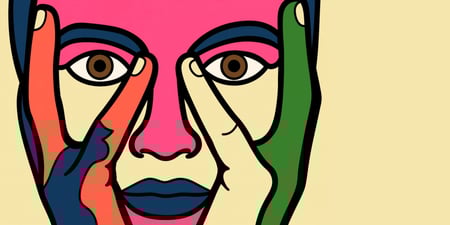
Borderline and Personality Disorders

Overview
Personality disorders affect how individuals think, feel, and relate to themselves and others. They involve enduring patterns of behaviour, emotion, and perception that differ markedly from cultural expectations and can cause distress or difficulty in relationships, work, and self-image[1][3].
Among them, Borderline Personality Disorder (BPD) is one of the most recognized. It is characterised by intense emotions, fear of abandonment, impulsivity, unstable relationships, and shifting self-identity[2].
While personality disorders can be deeply challenging, they are also treatable. Recovery is often gradual and involves cultivating emotional regulation, self-awareness, and relational safety. Alongside psychotherapy and medical support, holistic and Traditional, Complementary and Integrative Healthcare (TCIH) approaches can assist in grounding, nervous-system regulation, and self-compassion[4][5][7][9].
Common Causes
Personality disorders arise from a combination of genetic, environmental, and early relational factors, including:
- Childhood trauma or neglect – disrupted attachment, abandonment or abuse[2][3]
- Temperament and genetic vulnerability – heightened emotional sensitivity or impulsivity
- Family instability or invalidating environments[2]
- Neurobiological factors – altered serotonin, dopamine and stress-response systems[2][5]
- Co-occurring conditions – such as anxiety, depression, PTSD or substance misuse[3]
Signs and Symptoms
Depending on the subtype (e.g., borderline, narcissistic, avoidant, obsessive-compulsive, dependent, or antisocial), symptoms may include[2][3]:
- Rapid changes in mood or self-image
- Intense, unstable relationships
- Fear of rejection or abandonment
- Impulsivity or self-sabotaging behaviour
- Feelings of emptiness or worthlessness
- Chronic anger, shame, or guilt
- Self-harm or suicidal thoughts
Personality patterns may feel difficult to change, but with time, therapy and compassionate self-care, people can build stability and resilience[9][10].
Holistic and TCIH Approaches
Complementary therapies can support emotional awareness, body regulation, and self-soothing — key components of healing for personality disorders[4][5][7].
You may wish to explore[4][5][6][7][8][9]:
- Mindfulness – evidence shows mindfulness reduces emotional reactivity and impulsivity in BPD.
- Yoga – enhances interoception, body awareness and emotion regulation.
- Meditation – supports calm observation of thoughts and feelings.
- Art Therapy – encourages expression and integration of emotions.
- Music Therapy – helps process grief, anger and relational pain.
- Somatic Therapy – assists in releasing trauma held in the body.
- Massage Therapy – promotes relaxation and trust in safe touch.
- Aromatherapy – gentle scents like lavender or sandalwood may reduce anxiety and hyperarousal.
- Nutritional Therapy – stabilising blood sugar and supporting gut health can improve mood balance.
Self-Care and Lifestyle Practices
- Practice self-soothing techniques (deep breathing, grounding, journalling).
- Maintain regular routines for sleep, meals and exercise.
- Build a trusted support network or peer group.
- Learn to pause before reacting to strong emotions.
- Engage in creative or mindful movement to release tension.
- Work with practitioners who provide safe, consistent therapeutic boundaries.
When to Seek Professional Support
If symptoms include self-harm, suicidal thoughts, or severe emotional instability, immediate support from a mental health professional or crisis line is essential.
Many people with personality disorders recover through integrative care — combining psychotherapy (such as Dialectical Behaviour Therapy or Schema Therapy) with holistic modalities that restore connection, body awareness, and self-compassion.
Verified SoulAdvisor practitioners trained in mindfulness, yoga therapy, somatic work or creative arts can complement clinical treatment[4][5][7][8][9].
Therapies that may assist borderline and Personality Disorders:
References
1. Personality disorder. Wikipedia; 2025.
2. Leichsenring F, Fonagy P, Heim N, Kernberg OF, Leweke F, Luyten P, Salzer S, Spitzer C, Steinert C. Borderline personality disorder: a comprehensive review of diagnosis and clinical presentation, etiology, treatment, and current controversies. World psychiatry : official journal of the World Psychiatric Association (WPA); 2024.
3. Bateman AW, Gunderson J, Mulder R. Treatment of personality disorder. Lancet; 2015.
4. Keng SL, Smoski MJ, Robins CJ. Effects of mindfulness on psychological health: a review of empirical studies. Clinical Psychology Review; 2011.
5. Streeter CC, Gerbarg PL, Saper RB, Ciraulo DA, Brown RP.. Effects of yoga on the autonomic nervous system, gamma-aminobutyric-acid, and allostasis in epilepsy, depression, and post-traumatic stress disorder.. Medical hypotheses; 2012.
6. Haeyen S, van Hooren S, Hutschemaekers G, van der Veld WM. romoting mental health through art-based interventions: results of a randomized controlled trial. Arts in Psychotherapy; 2018.
7. Price CJ, Hooven C. Interoceptive awareness skills for emotion regulation: theory and approach of mindful awareness in body-oriented therapy (MABT). Frontiers in Psychology; 2018.
8. Haeyen S, et al. Effects of Arts and Psychomotor Therapies in Personality Disorders: A Systematic Review Using GRADE. Frontiers in Psychiatry; 2022.
9. Stoffers-Winterling JM, Storebø OJ, Kongerslev MT, Faltinsen E, Todorovac A, Sedoc Jørgensen M, Sales CP, Edemann Callesen H, Pereira Ribeiro J, Völlm BA, Lieb K, Simonsen E. Psychotherapies for borderline personality disorder: a focused systematic review and meta-analysis. The British journal of psychiatry : the journal of mental science; 2022.