Peter Smith's Spiritual Approach to Storytelling

Join Peter Smith, author of the revolutionary "The Transcendence of Celeste Kelly," for a profound discussion on humanity's magnificent potential and spiritual awakening. In this special session, Peter shares insights from his positive thriller, which inspires readers to remember that "we are more than we have ever been told" and encourages transcending perceived limitations. Discover how humanity stands at a crossroads, poised for an incredible transformation as we realize our true, multi-dimensional nature.
Transcript
Cate: Good morning, Pete. How are you?
Pete: Hello, Cate. I'm well, thank you.
Cate: It's so lovely of you to join me on this, well, what's very rainy Wednesday morning down here in Sydney. How is it where you are up the North Coast?
Pete: We're clear blue sky in far north Queensland.
Cate: It's a kaleidoscope, isn't it? Absolutely. And Martine, thank you for joining us, too. It's lovely to have you with us. Really lovely.
Martine: Yeah, I wouldn't miss it.
Cate: Well, so Martine and I have both bought your book. I've read it cover to cover. Martine's partway through, "The Transcendence of Celeste Kelly." I'm surprised Martinee's only partway through because if you're anything like me, Martine, I didn't put that book down. I picked it up and I was like, "Well, what's next?" which was not what I was expecting because I very rarely read novels and I haven't been taken by one for a while. So, thank you, Pete.
Pete: You're welcome.
Cate: I would love you to tell us a little bit about the making of "The Transcendence of Celeste Kelly." Like when did you start and when did you finish?
The Genesis of a Novel
Pete: It all happened during 2023, I guess. And, you know, I've written a couple of non-fiction books before and I've written articles for magazines and all of that, and it's been research-based or consciousness-based and all of that. And I went to write this next book and it just wouldn't come. And it was my partner, Molina, who said, "Maybe you're supposed to write a novel," because I dabbled a little bit with some blogs about novels and stories from the future when the world's a different place as a way to create our own reality going forward. So I thought, "Yeah, that sounds great."
And then I did a session for somebody and some information came through in that session for me and I just really surrendered to spirit and realized I was meant to write a novel instead. And that's a way to encapsulate the work that we do in this beautiful illusion of consciousness and to get it further into mainstream things. People don't necessarily want to read a dry book that's got case studies and all that in all the time, but they'll always put their hand out for a novel if it's got a good story.
Cate: Absolutely. And boy does it have a good story. And I'm really interested to know how that felt to bring forward. Like, were you so deep in the story that you just had to write it down as it evolved in your head, or did you have to think, "Where to now?"
Pete: Well, it sort of gestated for a while, if you like, and it sort of started to gather its own energy. And the way I write books is that I do it on my— I write books on my feet. So what I do is, I do a whole wall of flip chart paper, which is interesting because the lady in the book does the same thing, and I plan a book and I do it in chunks from sort of top down, if you like. And I look at where is the, you know, where's the story going, what's it about, this piece goes here. And so I can stand back and I can look at that wall, and in the last house we were in, running all the way down the hallway. But you can actually walk the book from start to finish. And as you feel the energy of each piece, "Well, no, this piece needs to come back here and this piece needs to come back there."
But I think the biggest challenge for me was changing professions because I now know that non-fiction author and fiction author are fundamentally different professions. And I had to make some big adjustments. Fortunately, I had a wonderful editor at Alkira Publishing, Talia, and she gave me the feedback. I mean, what you need most from an editor is someone says, "That's crap, that's great." And then you build on the great and you reduce the crap. And sometimes in the gray area, you have a conversation about what should or shouldn't be included. So, you know, I think books these days written by people like us and this whole collective in SoulAdvisor is, you know, we're a collaboration with spirit, and, you know, we're part of a team that's both here and elsewhere bringing through a message that people need to hear.
Cate: Absolutely. And so true. I wonder, was that the, was that the editor that you'd used for your non-fiction books, too?
Pete: No, no. For the non-fiction book, I worked with a big publisher in America, which was where Michael Newton had his books published. My old mentor, "Journey of Souls," "Destiny of Souls." I worked with Llewellyn, and they, I guess I was disenchanted with the big publishing model. I had, "I'll send you a PDF, you make comments. Can we talk on the phone? Can we do this? Can we do that?" "No, no, just comment on the PDF back and forth." There was no unification of spirit trying to get the message across. So when I went and they don't publish fiction anyway, so I had to find a new publisher, and just in Google searches, I found somebody that I resonated with. I looked at what they did. They had a very different business model to big publishing, and yeah, it just felt right and it just took off from there.
Cate: Wow. So was that your very first choice? Like you're such an intuitive, Pete, in so many ways. Every time we've talked, I've really felt that sense of just knowing which foot to put in front of the last foot. You know, you're very sure-footed in your intuition. So, was that the first choice that you made, the editor?
Pete: It was. It was the first person that I approached and they took me on. And I think she was a person that was into meditation and that sort of stuff, and a brilliant, brilliant editor, and the feedback had been great. So I checked that out, but I think my content stretched her a little bit and her feedback on my content stretched me. So it really was a beautiful collaboration. I'm planning the next one and I'll— that's exactly where I'll go back to.
Cate: You grew.
Pete: Yeah. Yeah. She taught me a lot. She and she paused to teach me the nuances of being a fiction writer. And she said, "Look, I've written a book. You should read it." I read it. Got a lot about POV, you know, the point of view of the different characters, how to build momentum, how to do this. She had like a recipe. I wasn't quite in that recipe because of, you know, the book has a different purpose than just being a book. And yeah, she was just, she was great for me, Talia. And yeah, I think it was lined up by forces greater than us.
The Positive Thriller and Its Message
Cate: Surprise, surprise, Pete. I think you know what I was amazed at. I kept waiting during your novel, as you will too, perhaps. Martine, Cate, good morning, Cate. Thanks for joining us. I'm not sure, Cate, have you had a read of Pete's book yet?
Cate: No, I haven't had a chance to read it, but I thought it looked really interesting.
Cate: It's fascinating. Yeah, I will. I will. Absolutely. Good. I was just wondering whether I needed to get your feedback too.
But Martine has started reading and I read, and what was amazing is that it's a thriller, and it really is a thriller. And like all good thrillers, you cannot put this book down. Like it really—you want to know what happens next. But I kept waiting for the bad bit. I kept waiting for the, you know, the evil bit, the bit that went, you know, and collapsed your guts and made you feel horrible about the world and all the rest, you know, that most thrillers contain. It's the most positive book, Pete. And it's like remarkably positive and it's high. You leave that thriller completely elated about humanity. It feels like an absolute uplift the whole way through. So, was that true from the when you wrote it and you handed it? Sorry. Your publisher's name is Talia. Is that right?
Pete: Yeah. Talia. Yeah. Alkira Publishing. Yeah. They're based down around Kiama, out the back.
Cate: Oh, okay. Local. All right. So, you handed it to Talia. Did it at that point have any negators in there or was it always so positive?
Pete: I think it was always positive because the intention was to uplift the readers, very much so. And there's enough—she did encourage me to have a little bit more drama in there which I came back and I did bring in a few shadowy pieces. But there's no murders or crime scenes or any of that sort of stuff. It's not that kind of book. But yeah, she encouraged me to have that flip between antagonist and protagonist. And of course, that's nothing like that ever happens in a non-fiction book. So that again was part of my learning, but her guidance on the plot was—yeah, it did guide it a little bit towards some of those pieces that take people to the edge of their seats.
Cate: Certainly did. It really did. You know, like it—you just hung on the edge of an implied something that might not be positive about humanity, but, you know, your intention which you wrote in the forward, I really, really loved, and I'm just going to read that out because I think that it's such an important piece and I think that you managed to achieve it. So, you were stating very clearly in your forward, "We are more than we have ever been told." And I think you always spread that message, Pete, no matter whether you're doing therapy, if you want to call it that, or being with people or that art that's behind you, you know, that's so very much part of it, or any of the open-hearted gifts that you provided to people during COVID. The message has always been, "We are more than we have ever been told," and we know that, but reminding people until it sticks is something that's just so important. And then you went on to say, "We are magnificent in ways we have yet to understand and we also have the potential beyond our wildest dreams." So, thank you. Thank you very much.
Pete: Well, I think we're all like that, Cate. And I think the great tragedy of society is that we've been told that we're this tiny little thing, you know, we're one tiny little thing in humanity and we should just, you know, go to work and pay our taxes and do this and put up with stuff and all of that. But, you know, I think once we understand who we really are, then we're truly set free. And my take is that, you know, this, even this human being Pete, whether it's Martine, whether it's Cate or the other Cate, I mean these are just a disguise for an eternal multi-dimensional consciousness. And once we understand that we're that and we're not the disguise, it opens the book of our soul, knowing that just this piece that we're in at the moment is a simple chapter or maybe even a paragraph in that book depending on the size and magnitude of who we really are. Of course, this is bad news for big business and corporate and government and all that sort of stuff. People remember and discover who they really are because the world will change in an instant. But I feel that our role in the light worker movement is to help people remember.
Cate: Absolutely. I feel like it's the most potent way forward, frankly. And, you know, we're living in a time of whatever you want to call it, economic slavery, for one, and also leading people to war by the nose, making the most of the fear agenda that can be made, etc., etc. So as you say, it's impossible once you've realized the magnificence of ourselves to actually be led like that anymore. So, and it's such a positive message. I think the word remembering is featuring large, isn't it, at the moment in our community and beyond. But it's like, remember, remember, keep coming back to the fact that we really are connected to so much. We're connected to ourselves deeply. We're connected to each other. We're connected to community. We're connected to the planet. And all of these things make us strong because we're rooted in. And the disconnection is what allows that power to take form and wreak havoc. Yeah. So, I loved your book from that angle.
Pete: Thanks, guys. Revolutionary.
Cate: Really?
Pete: I'll pass that on to the team because I don't think I wrote it by myself.
Cate: No, I'm sure not. Pete, I would love to invite you to maybe read a bit from your book if you were up for that. I don't know if you've chosen a piece that you'd like to read there.
A Glimpse into the Book: Celeste Kelly's Journey
Pete: Yeah, there is a page I'd love to share with anyone who's watching. And a little bit of context, first of all, is it centers around a quantum physicist called Celeste Kelly who lives in the Blue Mountains and works in Sydney at University of New South Wales. And she's been a researcher, but there's always been a deeper, sort of spiritual side to her. And she had, she lost both of her parents, so she's going through her own grief and tragedy from all of it. And she gets further and further involved. She has a spiritual friend. She warms her up. She tells her about this thing called Reiki. And, you know, it starts to get her interested in the energy side of it as a quantum physicist.
Anyway, one thing leads to another. Without trying to do too much of a spoiler alert, ultimately she connects with her spiritual guide, a person who steps into her life and helps to guide her on her journey towards a path where she can serve humanity from being a quantum physicist but not being wrapped up in the system and not being seen as an alternative therapist or an alternative healer that people can just say, "Oh, that's that other stuff." Because she's coming from a world of science. So she has these conversations with her spiritual guide, and I'd like to just share a page from one of those conversations because what he does is he tells her about the possibilities for humanity. So I'll start from here.
"Celeste frowned. 'Too much detail. Big picture it for me, Bob.' That's the guy's name, Bob. And there's a joke behind his name, but anyway, he says, 'Call me Bob.' Something stirred deep within and she felt the internal warmth rising again. And this is Bob. He says, 'This is all about to change at a planetary level. And you have a role to play. Are you ready to hear this?' Bob asked. 'Try me. You know that if I run away screaming, I'll always come back.' And Bob nodded. No smile this time and more serious than usual. 'Humanity is at a crossroads and will soon move through a period of transformation as you learn more about yourselves and your place in the universe. One of the things you will discover is that much of humanity's potential has been limited at both the individual and collective levels. These limitations are installed in most of your systems on the planet. Those of us from elsewhere have been watching for a long time, waiting for this moment, and it has now arrived. You are entering a time of profound discovery and we are supporting your efforts with great love. Not all are ready for change and will not be an easy road. But the support for these changes comes from all corners of the universe.'"
"Something strange happened within Celeste. An old memory emerged. Somehow resonating with what Bob was saying. She felt a sense that she chose to be part of this. 'You mentioned I have a role in this. The field of quantum physics is about to realize that those other dimensions being speculated about are close by and can be accessed. This will bring unimaginable reforms not just to science but also to the world at large. In time this field will be renamed quantum metaphysics. There will be no more theoretical physicists. They will be known as quantum alchemists. This is because nothing will be theoretical anymore. The secrets of the universe will be known. This will take—this will all take time, many decades as a whole generation who have built the old ways fade into the past. The term physics will relate to Newtonian physics and honor that part of your history. Science which has been molded to benefit some will be replaced by meta-science. There will be a golden age of advancement which will include discoveries beyond imagination. We may discuss these as time unfolds, but not now.' Bob paused to let this sink in. Celeste had been right. She was ready to hear this. 'You asked about your role. It will include, but not be limited to, being a pioneer in the discovery of access to other dimensions. Your life's work and that of others will be instrumental in moving quantum physics to the new quantum metaphysics, and a new type of civilization will emerge for human.'"
So there's a lot of that back and forth with her spiritual guide as he helps to paint a picture of the future so that she understands the next steps that she can take and she makes further discoveries about herself and who she really is as the book unfolds.
Cate: And I think she also makes further steps and discoveries about who we all are. You know, it's just a beautiful model for the unfolding of our own spirituality or our own coming back to spirit, should I say.
Pete: Yeah, absolutely. Yeah.
Cate: It's time to remember.
Pete: Time to remember.
Cate: Exactly. And you've also managed to weave in, and I guess because of Talia, that whole undercurrent of skullduggery and the deep state in there, but, you know, it's alluded to. It's off there in the distance. It's over there. It doesn't impose itself into the book. But we understand that it's one of the parts of what we're all working through, I guess.
Pete: Yeah. Yeah. Absolutely. And I think that there's this sort of undefined spectre in the background, and that's about there's attempts to sabotage what she's trying to do and even in a life-threatening way. And without going into too many details for spoilers, but there's something in that that echoes a lot of what people with different thoughts have been through over the years. You know, every time there's been a free energy device that's come out, it seems to have disappeared. You know, people who challenge the world view as it is seem to fade away somewhere. And it's complicated and difficult, but it's that spectre in the background that I feel we need to challenge and call it out of the shadows and into the light so we can understand it and tell it that their time is done.
Cate: Their time is done. Yeah, that "fairing poorly"—that people with vision tend to, you know, "fairing poorly" covers is a fairly broad term, isn't it? But it's absolutely killed at the stake, you know.
Pete: Yeah, absolutely. We've all had a bit of that in other times and places.
Cate: I think we've all had a bit of that in this time and place, you know. I was deeply delighted to see, Pete, that finally there may be the reinstatement of private health insurance for seven different types of natural therapies coming up. Oh, fabulous. They summarily dismissed 16 types of natural therapies a number of years ago and deprived people of their income. So there's an awful lot of very, very talented and hardworking and skilled practitioners who had to kind of take a deep breath and start dog washing or whatever else, you know, do something else for a while. It's been a very punishing time for those of us in the healing arts. So that's still true.
Challenging Old Paradigms: Education, Health, and Society
Pete: I think what you're talking of, I think as the consciousness of humanity raises, Cate, I think that a lot of the old models are going to fall away. And I talk about the table, you know, with the four legs of the societal culture in Western and you've got a finance system and you've got a governmental system, you've got an education system and you've got a medical system, and that's the four legs of the table. And they're all based on material wealth, power, control. All we need to do is take one leg out and the table topples over because they're so intricately interwoven with each other, all of these different systems.
And with all due respect to education systems, I mean, I've been to university and all that sort of stuff and learned some great things, but I think that we continue to propagate the culture through the content of our education systems at every level. And it's built around the status quo, not around what's possible. I look at the everyone talks about the spectrum and ADHD and all of that, and I feel that the wiring of humanity is changing and our education systems haven't caught up. And there's other linkages back into other systems around that as well that could be a root cause. But for me, it's about, well, if we're building the future of the planet, we need to build the future around what the young people need and how do kids need to learn, you know. The days, when I went to school and probably you as well, it was piece of chalk on a blackboard up front. And now it's about, you know, experiential learning when there's this incredible shift towards homeschooling. I've got lots of friends who are doing homeschooling for their kids now and they're out in nature. I've got a friend American. She taught her kids to build a TV last week. So, you know, I mean, this is this is where real education goes.
Cate: Yeah. And wow, to be empowered from the beginning or not to lose our empowerment, you know, it's not like we have to gift that to our children. We have to provide the pathways for them to go forward. It's very, very true. I was actually one of the books that we're going to be highlighting this month is "La Déscence," which is a beautiful book by Hazel Vog. It's only written in French so far. So I've had to access from the back of my head my French, and I'm up to chapter three, I'm happy to say. And yeah, it's okay. My French is still there somewhere. But what I have remembered in doing so is how I was taught French back in a European school. Fear-based, you know, coming from Australia, not having learned any other language, age 10, 11, you know, and it was literally wrap over the knuckles kind of hardcore terrifying learning system based on the British model. And I—it's been really, really interesting just to think into the amount of fear that we all grew up with. Like how much that was part of the educational system. Don't transgress here, there, or anywhere, you know. But just learn this by rote and repeat.
Pete: Exactly. And I remember standing outside. I was a bit different at school. I got kicked out of Sunday school for asking too many questions because nothing made sense to me. But back at school, I remember standing outside the principal's office and waiting for the cane. I mean, that was, you know, that was the 60s, I guess, early 70s.
Cate: Are you that old?
Pete: Yeah. Well, yeah, I'm in my 60s now. So I every time I reach a new decade, I say, "Oh, this is the wisdom decade." And then you go another 10 years. "Oh, this is the wisdom decade." So I think I guess I actually enjoy getting older.
Cate: Yes.
Pete: Because I'm 61 now and I look at the stuff I worried about when I was 51 and it doesn't matter anymore.
Cate: Again, a beautiful and radical thought. Enjoying getting older is part of remembering. Like every intelligent system in the world, intelligent culture, reveres getting old, celebrates getting old, you know, "Yahoo!" you know, people see who I am now and I'm able to give back and all the rest, you know. Like it's a beautiful model, but we've been taught to be fearing it and puffing up our cheeks and our lips and trying to inject and doing whatever we need to do to make sure that we don't look old. So, you know, again, that's a beautiful gift. I mean, I'm thinking back to my time, which was in the 70s. There were still canes. And we in our sewing class had to make dresses and hats for the canes that the teacher would then use to hit the kids. Like, my goodness.
Pete: Oh my good. That's—that's nuts.
Cate: That was nuts. That was nuts. Okay, I'm going to open up this conversation because I would love to include Martine and Cate in this conversation. Now, I can see that you're both on silent and have gone invisible, but Martine, I'd love to engage you in this conversation, too. How's it, how's it landing for you, this book?
Martine: Yes. Yes. I mean, I'm very much aligned with what Peter is saying and what you said about education and based on fear and programming and all this. The same in health. I mean, we have to change the paradigm and from fear to curiosity about what's going on in our body and just address that completely differently and re-empower the person to heal from within. So it's across all systems. It's just incredible. So this the meta change is across everything. So yeah, I'm looking for—actually, I'm reading the other book. I didn't, I forgot about the book that we discussed. I'm reading the other book. So I haven't touched the one we discussing today, but now I'm really excited to read it. So, but yeah, that's where we are. We need to move from that fear-based model to trust and faith and curiosity and expansion. So yeah. So prepared for that amazing way of expressing that for us all, all of us. So yeah, beautiful.
The Michael Newton Institute and the Unseen
Cate: Thanks, Martine. I mean, in the education systems, even within the book, there's a comment by Celeste Kelly when someone says to her that, you know, when you when they do the peer review process, when you write an incredible research paper, often from your own observer effect, of course, but you write your own research paper and then you have to table it to your peers. But if you're ahead of the game, who do you give it to? I mean, even if you do a PhD, I mean, a PhD is technically extending the, you know, the knowledge of a particular place in a particular subject in a particular, you know, segment of academia. But what if what you've got doesn't fit into one of those segments? I mean, and she challenges that and she says, "Well, I've got to give it to people that don't understand what I'm doing. That's how you hold humanity back."
And I mean, a personal example of that for me was my old mentor, Michael Newton, at Michael Newton Institute, where we do the Life Between Lives work. I mean, he was Dr. Michael Newton, but his doctorate was in counseling psychology because that was his background as a psychologist. So the guy that did 7,000 cases of the afterlife, his doctorate was in something that was fundamentally different from the incredible research that he was doing. And it's only recently now that someone has done their first PhD in that subject because we have people with doctorates who are now active in that field who can supervise them. So we're starting to get there, but it's—I think the whole academic model is something that wants to crawl ahead rather than break new ground. And that's one of the things that Celeste points out in the book.
Cate: Beautiful. I'd love you to just describe a little more about what the Michael Newton Institute is. They're now very happily one of the associations that we're partnering with and I'm excited, very excited about that. But I'd love you to describe to those who are listening what the Michael Newton Institute is all about.
Pete: Sure. Happy to. Cate, Michael Newton, he passed in 2016. He was pretty old by then. He was about 84 years old. But what he started to do in the 60s as a psychologist said, "All these people have these metaphysical experiences." In fact, somebody went to a place outside of time and space where they were in the in-between. And it had been described as the Bardau and all of these other type places. But there was the reincarnation model is just about flipping from lifetime to lifetime. Where do you go in between? You just go into this blurry thing. Well, he took 7,000 people in there and he mapped it. Interactions with soul groups, spiritual guides, planning the last life, debriefing the one before, you know, what is the sweeping view across the lineage of our soul. And he was getting older, so he wrote books, "Journey of Souls," "Destiny of Souls." He wrote those in his 60s. He wrote one about his method in the 70s, but he started an organization which has now stretched out to—it's a bit like SoulAdvisor and how it's exploded out to so many countries. You know, at 40 countries, 20 languages, 200 highly trained people around the world, and we've reproduced his body of work 10-fold. So we've now done about 75,000 cases.
But what we do is we take people into the soul persona and stand in the energy of your soul and look back at the human form. And this is the place that's really behind my comments about understanding that Pete's a disguise or a greater consciousness of who I really am. So for me, it's about, once we stand and we look to our human life through the eyes of our soul, nothing is ever the same again. Now, you can have a near-death experience, you can have an out-of-body thing, you can do all of that sort of stuff, but this is a way to do it without the medical expenses. So, yeah, it's a great organization. I've been there about 20 years. I was president for about 10 until we had to split that into four different jobs because it got too big. And I'm still there, helping to lead this wave of consciousness. And what I, and Michael as my old mentor, he really loved quantum physics and we had some chats about quantum physics as well before he passed, which was instrumental in pointing me further in this direction.
Cate: I wonder if he's been part of the mob that came through you for this.
Pete: Yeah, his energy is still with us, I'd say.
Cate: Wow. Amazing. Really amazing. And I can't believe that. How many? 700? 70? How many? What did you just say?
Pete: He did, he did 7,000, but our organization has done 70,000. I mean, they're not all in a store room in America. They're, they're sort of, you know, confidentiality, client personal journeys. I mean, I've got a whole lot of cardboard boxes in the office here. So they're distributed evenly around the world in all of our clinical practices. But each year we track the numbers, we track the themes, we get together as a world conference every several years to share ideas and swap thoughts and discoveries. So yeah, it's its own wave of consciousness within the big one that we're all part of.
Cate: Wow. Well, I do hope that you swing your all of your understanding and your knowledge over to Angkor Grace in Cambodia and embed there, please, next conference. That would be rather fabulous.
And something that we brought up last night and I want to bring up again is the fact that here over here at SoulAdvisor, we've always been talking about the fact that we're an evidence-based platform for the establishment or the spreading of traditional complementary integrative health care throughout the world. But within the last month, literally, Pete, we've rejigged that statement to an evidence-based platform with a deep reverence for the unseen.
Pete: Ah, great.
Cate: Yeah. Which is so important because we don't know what we don't know. And anyone that thinks that we know everything is limiting themselves and everybody else.
Pete: Yeah. When I, when I do talks, Cate, one of the things I talk about is the electromagnetic spectrum and how our human senses pick up a very, very small percentage of it. You know, we've got ultraviolet, infrared, x-ray. I mean, the whole universe is made of waves and particles, but as human beings, we pick up a fraction of a tiny percentage. And, you know, there's so much more out there. And when we get an understanding and when we're open to the parts that are in the other parts of the spectrum, then so much more is possible.
Cate: So much more, so much more is possible. And I thank you so much for encouraging us all to, you know, take—continue walking that path. And I'm just wondering if there's any more final comments from Martine or Cate before we finish up, whether how you both feel about the word "deep reverence for the unseen," which is all about what Pete's about.
Kate: I would love to say something and I'm very sorry that I have had my video off this whole time. I have not had a shower. I'm running around, so I thought I'm not probably fit for being seen, but I've thoroughly enjoyed hearing you speak, Pete, and also seeing your face, Kate. It's lovely to see your face after so long. I think that is the most beautiful phrase, the reverent—what was it? Deep reverence for the unseen. It just encapsulates so much of what we do and it's often really hard to explain. I find it often really hard to explain what I do and how I work to people and I just think that's such a—yeah, a really powerful energetic statement for sure. Yeah.
Cate: Yeah. I'm glad you love it, Kate, because I do. Yeah. I think using it so much at the moment because we've just been through the reestablishment of the plan by the WHO for traditional medicines in the world from 2025, which will last now until 2034. It has all sorts of promise and it has all sorts of threat. But, you know, one of the biggest promises is that it has brought the world together—South America, Africa, India, etc.—to really think about how do we bring traditional medicines into the limelight and integrate them with everything else that's happening, given that over 80% of the world rely on traditional medicines for their healthcare. So, that's really positive and there are so many strong, strong voices. But what's really scary is that the word "evidence-based safety, profit share" comes up too many times for my liking.
Pete: I agree.
Cate: Yeah. And that thing of evidence base is all very well, but we have to come up with some stunning new models now of how we collect that evidence base that are actually reverent of the unknown, you know, that are actually clearly full of respect for the unseen because that's how it works out there with traditional medicine. You know, it's not things that we with our Western frame of mind have focused on for a good number of decades now or centuries. So I think we have to come up with an evidence base that is respectful of a way of collecting that evidence base for traditional medicine so that they're not sidelined and that's—that agenda doesn't come forth. So, Martine, any last comments before we today.
Martine: Well, I mean, just listening to Pete, just realizing that we're living in a very exciting time. We are in the middle of the change. So, it's like a privilege to be born in that time and witness that. So, yeah. So, with people like Pete, we—my course, better with that, have that confidence and that trust in the process.
Cate: I guess we're the lucky ones, Martine, because we got the, we got the jobs here. There was a bit of a queue of people queuing up to get here, I think, in these times.
Martine: Oh, really? Yeah, I believe so. Yeah. Well, we got it.
Cate: Yeah. It's a time with a lot of responsibility, isn't it?
Pete: Sure it is. Yep. We're going to get the job done, though. We didn't come here to lose.
Cate: No. No, we did not. And I cannot wait to share with you where we're going now with SoulAdvisor. And I want to echo the words of yesterday that you heard, Martine, when we were talking to our founder, Elaine Euan, who said, you know, her methodology in achieving this, her zone or her way, has always been to do it in a way that's relaxed, open, to accept what comes through, and to understand that we're all going there anyway. And so let's do it with a real ease and a real beauty. So let me say that really, really clearly. That's what we're doing.
Martine: Yeah. Beautiful. Stay in the flow.
Cate: We're moving. Excellent.
Martine: She's so beautiful. Her book also has such a purity to it. It's just that's the word that came to me all the time when I'm starting reading it. It just feels pure, pure energy flowing through her.
Cate: Yeah, it's beautiful. And Peter will be sending you that today. And Kate, thanks, Kate. Thank you. So, thank you, Pete. Thank you for everything that you do and all the beauty that you bring to this planet. I'm so delighted that we have you in our community and want to thank you for being part of us since the very beginning and bringing what you bring. So, I hope and I pray that millions of people read your book and get similarly inspired to us. And yeah, may our tiny little offering here out to the world kind of inspire people to keep snowballing the effect.
Pete: You can never underestimate the ripple effect, Cate. I'm very grateful for the opportunity to have this conversation. I'm passionate about what I do and I love to talk about it. So, thank you so much. And thank you. Thank you very much also to Martine and Kate for getting up early.
Kate: Oh, I've been up for hours. It's been a, it's been a pleasure to be here. I'll be buying your book today, Pete. It sounds amazing.
Pete: Thanks, Kate. Yeah. Thank you.
Cate: Be there. Thank you. Thank you, Kate. Have a great day. You too. Bye, everyone.
Pete: Bye.
Martine: Bye.
Similar podcasts in Book Club Series July 2025
Jacqui-May Bridge on Using Vibration to Facilitate Wellness
A Guide for Life After Loss with Joy Fairhall
A Guide for the First Six Weeks with Yolande Hyde
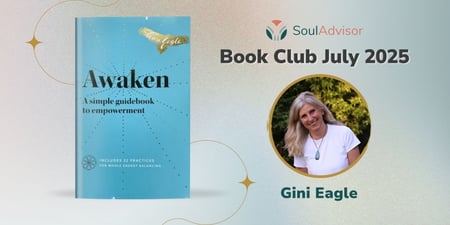
Gini Eagle's Mission to Help You "Awaken"
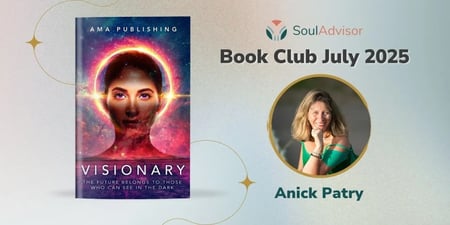
Anick Patry on How Writing Saved Her Life
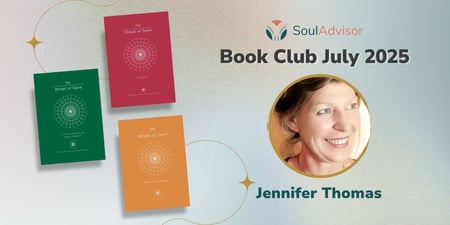
Jennifer Thomas on Food as Medicine and Intuitive Eating
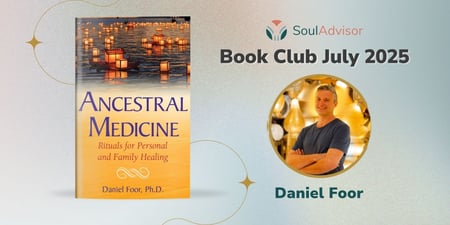
A Deep Dive into Ancestral Medicine with Daniel Foor
Angela Sciberras on Harp Music and Crossing the Veil
Pascale Osanz on the Hidden Influence of Color
Connect with Your Ancestors with Hazel Volk
Denby Sheather on How to Live and Love in Death