Connect with Your Ancestors with Hazel Volk

Join Hazel Volk, author of the profound "La sagesse des ancêtres" (The Wisdom of the Ancestors), for an illuminating discussion on connecting with ancestral wisdom and the unseen world. In this captivating session, Hazel delves into the deep reverence for our roots and the spiritual realm. She shares how understanding our lineage and connecting with the continuous presence of our ancestors can bring profound healing for intergenerational trauma, offering wisdom, protection, and strength to navigate our lives.
Transcript
Cate: Good morning, Hazel. How are you?
Hazel: Good morning, Cate. I'm good. Thank you very much.
Cate: Where are you? It's daytime where I am. So, yes. What time of day are we in Canada?
Hazel: It's 12:00 p.m. here.
Cate: Sun's not yet over the yard. It's just coming up. And I feel like it's a very appropriate time to discuss your book because it is a beautiful book all about ancestry from what I can tell in my not-so-good French. And it's about, you know, that reverence for the unseen, that deep reverence for the unseen. And for me, that is the nighttime part of the day. You know, things move that we don't necessarily see because we're asleep. It's a good synonym for how we operate in our own lives with things that we don't see. So tell me a little bit about when you wrote this beautiful book.
The Book's Unexpected Origins
Hazel: I wrote this book back in 2022. I explain in the book that this book and the content of this book came during meditation when I was in quarantine in Australia actually. And I had a book in mind. And I talked about that with my teacher initially, but I didn't know what it would be about. I know I always wanted to write and I thought I had time for that. And I had this meditation with my ancestors for something completely different. And they were like, "You're going to write a book?" And I'm like, "Yeah, of course. Did you see me writing a book?" Not really. And so I was like, "What about you give me the table of contents and everything as we are here?" Yes. And they did. I had a notebook and a pen and I was just listening, eyes closed, writing down. And when I opened my eyes and read what they told me, I was like, "That's actually that could be a really cool book." And then the motivation kicked in and that's it.
Then the more magical thing is that exactly on that same date, a year later, so that was in 2021, and in 2022 on that very same day, a French publisher contacted me out of the blue on WhatsApp saying, "Hey, I really love what you post on Facebook. Do you have any book project in mind?" I'm like, "Wow, this is really weird." And so that's how it happened.
Cate: Wow. You know, it's—as I said, deep reverence for the unseen. There are so many things that move around us, aren't there? And in reading this book, I've been feeling just how important it is at this time. And I, you know, I'm very glad that you're here talking with us and I hope a lot of people tune into it as a result because it feels so important to really think into who we are in the deeper sense. And it's fantastic that your ancestors came online and said, "Get these words down." It really, really is. So with that kind of oomph or inspiration behind you, how was the writing process?
The Writing Process and Ancestral Guidance
Hazel: It felt like I was in a liminal space for 9 months. I wrote this book in 9 months, which is crazy now from where I am. And I look back, I'm like, what did I do? And as you probably read in the book, I lost both my parents during that time. So that was crazy. And it was a very—it was a really painful process in the way that I had a deadline and I really put pressure on myself and really burnt myself out. But I love writing and the writing itself was something that was deeply healing. There was really something coming through me. But the most important is to maybe add here. People might think I'm crazy saying that but I have weaknesses so I'm fine. But I would wake up during the night and hear my ancestors' voice or voices saying, "Hey, you wrote this on this page in this chapter. Change it to this." And they would give me how to change the content. And I would take my phone in my hand, turn it on and write and be like, "Hang on, hang on, repeat, repeat." Because it's in the middle of the night. And I'm glad I had my wife next to me being able to witness that because nobody would ever believe this. So, it's not really weird because once my book came out, I read my book and I did not remember writing anything.
Cate: Literally automatic writing, isn't it? As we call it.
Hazel: Feels like it. It feels like it. But I want to express my gratitude here also for all my team. I had some very close friends reading my book and correcting and editing and giving me feedback. You know, it's also a group process.
Cate: Well, you always need that. I mean it has to translate to the public ear and the public eye. So you have to have something between a creative process and that and putting it out on the shelf, don't you?
Hazel: Yeah. Yeah.
The Integration of Experience and Land Connection
Cate: So that happening, I'd love to know how that landed you. Did it feel deeply integrating? I mean, that's how I'm thinking it might have been.
Hazel: I think I'm integrating the book since then. I'm living daily everything I've written in it. I did write this book really out of experience. So, as I say in the beginning of the book, I am not an anthropologist. I am not a historian. I am not anything like that. And I'm really right out of my experience between my life in France and my life in Australia, what I've witnessed and experienced in those spaces, in my relationship with the land more than anything because I do not separate the land from the ancestors. It's very blurry for me. I'm trained into ecopsychology and into ancestral healing. Might be important to mention that. But I think my journey really started as an eco-anxious, eco-sensitive, I don't know how to say that, but child many, many years ago. And then later grow up as an adult who started deepening my relationship with the land through wildlife photography. And this is really how I started seeing, hearing, feeling the world with all my senses. I got, as I was walking silently in the woods to catch animals with my camera, I felt like those ancestral ways of walking quietly, of not being seen, like hunting. It really is like hunting. It came back naturally to me and then I think this is how everything started. And then later my relationship with my ancestors simply brought me back to this sense of belonging to the wider web of life more than just to my human family.
There's really something mixed up. I actually forgot your question and I might be completely out of topic.
Cate: I'm just loving listening to you talk. It's bringing back such deep memories for me and it did too when I read your book because the first chapters are devoted to that desire to be outside in the woods and connecting and listening and having deep conversations with the natural world. And I grew up like that too. I grew up with all my friends were insects. That was how it was. So I spent a lot of time in communication. My little grandson now, I tell him how to speak to lizards and how to speak to dragonflies and all of those things, you know, and how respectful you need to be. So that deep respect and capacity to listen to nature has obviously stood you in good stead when it comes to writing of all things human as well.
Hazel: Yeah. And also the reciprocity of it. And also that reciprocity was born from my wildlife photography. When one day I was so quiet that I was bordering on the ground, getting close to a deer with a phone and I remember taking photos without being seen, that was my sole goal. I didn't really care about the photo I would take, but my goal was to not be seen so I would respect nature. But that day I was taking photos of this very intimate moment with a mother and a baby, clearly animals. But I found it really disturbing. I was like, "Can you imagine if someone was in a garden, hidden, taking a photo of a human woman and her baby? That would not land that well and post those photos without consent." And all of a sudden I had this very big shift in me where I no longer go in the wild without being seen. I announce myself. I'm like, "This is who I am. I am here. I want to tell a story about how you live, where you live, what you do, because I have a narration for you." And if you accept me, obviously you're going to stay around me and let me take photos. And if you don't, you might leave or I might just leave if I feel like it's not the right thing to do. But I make sure there's a reciprocity or a form of consent around my relationship. And that's the first memory I have of consent, of reciprocity in my personal history. But our roots, deep roots, those I speak about in this book are about that, about reciprocal relationship with the living.
Ancestry, Land, and Unbroken Culture
Cate: Reciprocal relationship. It's so gorgeous because, you know, it can be—when something is unusual, for example, talking with the ancestors is quite unusual for a lot of people. It can just be seen as a—I don't want to say a form of entertainment, I don't want to say it like that, but, you know, it can be seen as quite odd. Whereas it's a, it's a real commitment. It's an absolute responsibility to make those contacts and hold those contacts and respect what comes from those contacts. So, I think that that comes out from what I can tell—I keep saying "from what I can tell" because my French isn't good—from your book. It's that deep respect is just woven throughout the book. And coming from land, you've spent a lot of time in Australia and, you know, the same is true throughout the planet. But here we have the oldest living culture who holds strongly to the idea that everything is listening to you. You are in deep relationship to every rock, every butterfly, every bird and every whale. And so whenever I'm hanging out with my Aboriginal friends here, then it's always discussed in terms of familial relationship, how they're relating to everything around them. So I think that that's a precious aspect of what you've brought into this book and I'd love you to talk a little bit more about what you just said, which is the land is our ancestry as well.
Hazel: Yeah. So I think that my life in Central Australia where I lived and worked, and among Aboriginal people as well, I felt like I was a sacred witness of that daily relationship, ongoing relationship. And you know, we could go and talk about the ongoing arm of colonization with it and everything that happens, but I'm not going to speak about that here because I speak about that quite a bit in the book in the first chapter. But it's important to remember that and I think my book, that connection to ancestors, that connection to the land and that reciprocity and listening, hearing the land and being an active participant on our territory. We very often as Western European—I'm really generalizing here—we very often turn towards traditional cultures, indigenous cultures for that, but often we forget that we have that too in our roots. And this is what became really obvious for me when I was there. And the introduction of the book that you're going to read later speaks about how my life there and me witnessing just the connection to the land there was what brought me back to wondering what we have lost as Westerners and the impact of that, the impact of the loss of our connection to the land, to our ancestors, to the world in all its dimension, basically. So yeah and so my book is very much about that. It's very much, yes, I speak a little bit about my life in Central Australia because that's my experience there. But my main goal is to remind all of us that wherever we are, whoever we are, we all have those universal animistic connections to the land in reciprocity and in active participation.
Cate: Yes, absolutely. And it doesn't matter if one only has access to a balcony with a basil plant on it and the sky above because we're embedded in nature. We are nature. We have a long and strong connection. And I think the forgetting that's happened with colonization and trauma—and let's not go there—but all of the different ways that we've lost our connection is temporary. Please. Yeah, please. I'm praying for that right now. And, you know, it's an incredible thing that your spirit took you to Central Australia to be in that situation in order to then communicate that out into the world.
Hazel: Yeah. I always wonder if there's a little bit of help from the land there. I was not randomly sent there. I had no idea. It's really like it happened. And sometimes I'm wondering if those spirits that are still living on this land, a land that never stopped the relationship or a land where humans never stopped their relationship to it. The spirits feel more alive, more vibrant, more right here. We can feel them, talk to them and all of that. While on my homeland in northern France, we had the two last world wars were there, bombed. It's all bombed. The spirits are gone. And it feels like to feel the land, to feel the spirits of the land, the ancestors of the land, it requires a bit more work because they hide because bombs fell on them. So at that time I felt really this observation when I went back to France that was really something obvious. It's like, why is it so easy for me to connect in Australia or in Canada with the soul of place and why is it so hard where I come from? But the history is so, it's the same in many ways, but it's also different. And the connection between humans and practices that were honoring these connections on my side, in my home, it was a long time ago, while in Australia, in Canada, it's still vibrant because it never really stopped.
Cate: It's an entirely different thing. And I say that very from a sense of experience. So, I grew up on a little island out in the bay, not far from here. It was a privilege, a real privilege. I knew every part of that land was like my mother, you know. So I knew every curve and then we had to leave that land. There's a very long story which I won't go into now, but it was given back to the traditional owners which was fabulous, you know, in the long initially it was slated to be with the Navy, but that stopped and then it went to traditional owners. So illegally I've paddled out there because my grandparents' ashes are there. Where I was conceived. That's where I conceived my child, etc. So, I have a very strong relationship to that land. And the last time I went out there, I was told not to come again, but the ranger came over and said, "You're not meant to be—" I said, "I know we're not meant to be here, but, you know." We got into conversation and I said, "I'm really interested to know your thoughts because you're from community around here and I know this land, but at the moment it is so alive. It's just like I can't actually explain it. I don't know whether it's because people haven't been here or is it because you've come in and done eco-action on the grass or it just feels like everything's buzzing." And he said, "Oh yeah, what?" You know, and then I kept pushing and I said, "I really need to have an explanation for this, what your opinion is because it's just amazing." And I said, "Everything's just voom, voom, voom, humming." And he said, "You can feel that, can you?" And, you know, he started to get—he started to open his ears a little. He said, "Huh?" He said, "Well, you know, when you were here and the history that this little island's been through, there was no access for the people. But more recently, within the last few months, we've brought out elders who've never come here to sing the land." And I was just like, "Oh my goodness." Because that's what it felt like. It felt like this song was within that land and it was actually singing out. And I know that that's true in the desert because I've heard it. It's a beautiful thing.
Reciprocity and Returning to Source
Hazel: Yeah, I think humans have this very particular way of connecting with the land in reciprocity where whatever ritual, ceremony, whatever practices are made. Well, they were born from the land. They are a co-creation between the human, the culture and the land. A culture is a co-creation between the person, the tribe and the land itself. And so those stories, those rituals, those ceremonies, whatever process, whatever name we give them, there's a resonance that goes on between those who are singing, dancing, like hitting the soil, hitting the ground, hitting the ground with their feet, with our feet. And I think the land has somewhere an ability to remember that because it holds the memory because the bones of our ancestors, of their ancestors, are there and it feels like there's a resonance and a recognition or remembering. It's like, "Oh, hang on, somebody's singing, dancing on me. Let's respond." And I think there is something like that, magical, like that going on.
Cate: It is magical and yet it's just so normal, you know, in Australia it is. Yeah. And, you know, I keep praying that it will be normal everywhere soon because the land is hankering for that. It's like a relationship, a pining relationship of asking people to come back into that, into that love, basically. Yeah. Really interesting. And I think you bring up that whole barefooted dancing which is very much part of what happens in this country. Yeah, it's fundamental, isn't it? That deep relationship. And whenever I've had it explained to me, it's about we give back to the mother through our feet. You know, that's, that's an acknowledgement of where we're standing and all that we've had and all that we're having. Yeah, it's a long way back, Hazel, but you know, let's see how we go.
Reconnecting with Our Roots: A Global Awakening
Hazel: Hey, it feels like there's a sort of awakening on a global level. I mean it doesn't feel like it right now with the current news, but I see more and more the word ancestor, the word animism, the word, you know, land and connection. So there is something happening because as long as we don't find those relationships with the land beneath our feet, we can't do anything. Any form of activism might not be that efficient if we don't start where we are. And we can't start where we are about including the web of life that is within and around us. And that's really including not only the tangible, visible species but also the energies dancing and the memories of the land and, yeah, there's something really deep I think to grasp that even me, like, you know, as much as I have a connection with the land, I'm still—I still feel like a baby beginner. My ancestors did and held that for a very long time. So, I'm relearning with them, through them, how to do that. But I'm really far from being able to feel on the land like say an indigenous person would do in Australia. This—not—I can't compare that because I don't have generation and generations of unbroken culture practice. So, it's going to be really hard to come back to a level like that one. But who knows?
Cate: Well, because I think the land is deciding as you know. I think it's that the land will teach. That's what happens when you sit in reverence really and it'll happen, but how long that will take is my big question. I think over here at Soul Advisor we're trying to bring that fourth part of the equation back into view. So, we're so fond of saying body, mind, spirit, but now we say earth, body, mind, spirit because you don't get well in a void. And there's a tendency in the wellness movement to want to get well in a void. You know, there's all this fancy equipment that you can put yourself in a room and you can—I don't know if you've seen those intravenous bars where you can hook up and on Friday evening and have an injection of vitamin B and, you know, you sit with your girlfriend or your boyfriend and hang out and have intravenous injections. But people are quite—I shouldn't laugh, I'm sure it's fabulous—but, you know, like yesterday we received an email from somebody who was suggesting that your wellness center could become a very modern place and it was a list of all the machinery that you might install, you know, to make this happen in order to ensure that you lived longer. And I'm like, I don't know if I will investigate further and maybe there are some aspects that are very, very useful. But being in a room hooked up to machinery, buzz, buzz, everything being measured and calculated and refined is—makes me scared and I and longer living longer in a world that is going pear-shaped. I don't even know if I want that. I'm like, when death comes and that's part of the reciprocity and the accepting that we are, we're meant to be anyway. We no longer do that with the way we process with like after death, the death of the body, but we are meant to be part of the big composting process and the renewing of the soil of the Earth. If we were in our natural environment, we would just be dead. We would be here. We would be eaten by other species. We would be—and people want to leave us. I think I say that in my book. People want eternity. People want to live longer. But really, if we let our body in so many ways die in the middle of a forest and we let the forest take care of our decomposition, we stay alive through the many species taking care of our body. And there's such a beauty in it. I mean, I don't know if I'm weird, but I quite like the idea of that.
Hazel: Well, if you're weird, I'm weird. I keep saying to my family, when the time comes, I'll be paddling out to the island, and I'd like to be left alone, please. Yeah. Because, you know, how many fish have I eaten? How many, you know, I've just been given so much to stay alive on this planet. And in some ways, I feel it is almost a little—with absolute respect to everybody's choice for their tail end—but I feel like burning one's body, there's a lot of resource in a body, you know, for other animals to eat, whether it's a sky burial being chopped up in Tibet or, you know, thrown overboard or buried under a sand dune or etcetera, etcetera. That's a lot of fodder for a lot of small creatures. So, it's kind of for me, I want to give back whatever I've taken and that's impossible, but I would like to give back at least my body.
Cate: Yeah.
Hazel: Yeah. I fully agree with that. I'm 100% with you.
English Edition and Introduction Reading
Cate: Yeah. So, a little bit more about this book. The publisher rang you, which I've never heard of that happen before, that a publisher should fund you. And the publisher is French. And so you wrote this book and it was published in 2022. Is that correct?
Hazel: I came out in '23. I finished writing in March '23 and it came out in September '23. Yes.
Cate: Okay. And it's in French, which is a beautiful thing for my French study. Thank you very much. But when do you think or do you think that you will bring forward an English edition?
Hazel: I have started the translation. I'm not far in it. I finished the introduction that you're going to—you're going to read like a shorter version of the introduction because it was a bit long. But I've started it and I decided that I will translate it myself and having it edited by someone else rather than finding a translator because my French—my book was initially written for a French audience. I adapted it as well because I have noticed how much romanticism there is there around other cultures and often out of context and without understanding the ongoing arm of colonization. So, it felt really important for me to voice this out in this book. Yeah. So, I would like to—I will translate the book as faithfully as I can from what is in there, but I think I could adapt it a little bit for a non-French audience. But I still speak about and similarities in older legends, cultures, and myths that I also witnessed in Australian indigenous cultures because that was the bar that I was doing as well. "Oh, there's this happening here, but there's also this happening on my head which feels very connected." So, that's, that's also one thing that really fascinated me. It's noticing all these little threads that feel like universal. So, yes, we come back to the book. I have started translating it and I'm going to do it myself and I'm hoping to do that before—I don't know, probably before the end of the year.
Cate: Fantastic. That's something to look forward to. Thank you very much. Then I'll work out how accurate I was in my understanding when it's all in English. So, I'm just about to do that with the introduction. And for those who are listening in, Hazel has asked me to read this in English because clearly Hazel is very French and I'm honored to read this. So, thank you very much. Okay. So, Hazel, you've asked me to read the introduction and here I go. Thank you.
Book Reading: "The Wisdom of the Ancestors"
"I had to leave the land of my birth to draw closer to my ancestors and consciously reconnect with my roots. Not merely the branches of my family tree shaken by the tides of recent history that touched us all, but the deep universal roots of my humanity. These roots bind me to Earth and Cosmos, the primal source of all existence, transcending any geographic or cultural border and reminding me of my place within the living whole.
This book grew from my own journey, my lived experience, observations, and lessons learned in the misty forests of northern France and the red sands of the Australian desert. It is the harvest of a life enriched by curiosity, risks, dreams, and inspirational encounters. A life punctuated by moments of magic found unexpectedly beneath ancient trees, besides hidden streams, in deep caves, and under uncounted stars. It sprang from the rhythms attuned to the moon's cycles, deep friendships with the wild, and gatherings around crackling fires. By living each moment fully, I discovered a truth more vivid and precious than any philosophy.
Born in the mining basin of northern France, it was a quiet woodlands away from the traffic's roar that I first discovered inner peace, walking silently to observe deer, foxes, and wild boar. From dawn to dusk, I dedicated myself to listening, watching, feeling, crawling, and smelling. When the scent of Earth filled my senses and the cool air wrapped around me, I felt deep within that I was connected to something far greater and that my true home extended beyond any walls. The forest had become my sanctuary. And communing with its inhabitants, its creatures, its winds, its waters brought me a sense of safety, wonder, and presence and belonging that I had never known before.
Yet those precious moments in the field photographing and my weekend hikes no longer filled the emptiness I felt. Returning to the office amid so much excess became unbearable. I poured my energy volunteering for every environmental cause on top of my photography outings and my job. Gradually I grew more overwhelmed, more invested, and yet simultaneously more powerless and beset by eco-anxiety. At the age of 26, my inner world collapsed. I yearned for change, for a life that was both richer in meaning and simpler in form. Far removed from a consumerist, restrictive, conservative, and self-destructive society.
I left the gray skies of my homeland for Australia's blazing sun. What was meant to be a year-long journey became a 9-year pilgrimage into the depths of my human existence. A rebirth at a gentler pace, giving the scars of a complicated childhood the time they needed to soften. I fell in love with the desert, its vastness and rugged ranges. Alice Springs, Mparntwe in Arrente, a small isolated town at the continent's heart, offered me silence and space for many years of deep introspection with no possible escape from whatever emotions arose. There I discovered a generous community of kindred souls who share similar values and love for the Earth. People who uplift one another and inspire me at every turn. It was also there that the invisible began to reveal itself to me more tangibly. Though I was a stranger to those lands, I felt the spirits of place, sustaining my inner quest.
My first day in a remote Aboriginal community was in Yuendumu in November 2013. I came to volunteer at the local radio station with no prior knowledge and was met by a colleague who gently introduced me to the essentials of Walpiri culture and the complex and all too often insufficient if not harmful government efforts or failures to address the devastation of colonization. My task was to sort through the video archives that held hundreds of hours of daily life and cultural ceremonies from Yuendumu and its neighboring communities. I had everything to learn.
One evening, my friend Christine and I made our way to Rosy's house, drawn by the warmth of our new connection. Rosie, a gracious woman in her 70s, welcomed us onto her porch, where we settled alongside her faithful dog, Whiskey, as dusk unfurled across the sky. The night air was thick and humid, yet a soft breeze offered relief just as the community around us came alive. As we gazed at the first stars twinkling in the sky, Rosie began to sing. In her gentle, halting English, she told us how vital it was to record her people's songs for future generations. She dreamed that one day her children and grandchildren, now absorbed by their smartphones and caught between two cultures, would listen, and when the time felt right, rediscover and revive the stories and practices of their ancestors. That night, I realized that technology could not only distance a people from its traditions, but also safeguard them. Moved by this insight, I felt called humbly, carefully, and respectfully to lend my skills to that preservation.
Gazing up at the Milky Way, I let Rosy's songs sweep me away. Grateful to be there, I felt both awe and longing as my thoughts wandered to the lost songs of my distant ancestors, my distant grandmothers and grandfathers, who around their own fires once gazed upon these same stars while their elders sang. In that moment, as the night sky spoke to me, my curiosity for my European ancestors' customs and traditions ignited a new quest for understanding. Who were my indigenous forebears in Europe? What legacy did they leave? How did they honor their ancestors? What role might I play in continuing their story?
These questions led me back to the archives of my native region to resume a family tree begun a decade before. Yet, after months of research, something still felt missing. A tangible, intimate connection with my roots. I would later discover this through the healing process I describe in these pages. An approach that quite literally brought me face to face with my ancestors and revealed how their journeys shaped our collective disconnection from Earth and one another.
Reclaiming my ancestral ties has not only ignited curiosity about my own lineage, but also opened my eyes to the deeper consequences of our uprooting, wrongs that echo through centuries driving us towards societal and ecological collapse.
The first part of this book lays the groundwork for the chapters to come. It seeks to restore the misrepresented identity of our prehistoric ancestors who are the product of an evolution rooted in deep relation and balance with their natural environments. Their deep knowledge and ancestral wisdom still live on today in many ways through the vibrant cultures of indigenous people who stayed rooted and survived waves of colonization. These living traditions, along with the myths and legends that persist in Europe, offer us guiding threads back to the relational values our distant ancestors held with sacred Earth. Each territory has its own way to be honored and cared for. A reality our forebears understood deeply. That is why before adopting practices from distant cultures we must first tend to our own roots.
In the second part, we will explore how Western spiritual seekers can unwittingly harm the very people whose traditions they revere, perpetuating colonization's ongoing injustices, and how to walk with both humility and respect. Ultimately, this second part is an invitation to return to source, to relearn interspecies dialogue rooted in the landscapes beneath our feet.
Though many Western rituals have been forgotten, their essence can be rekindled, reimagined, and adapted for our time if we truly listen to our ancestors and to the Earth itself.
Reclaiming ancestral wisdom also means remembering what it is to be a human beyond society's taboos and conditioning. The third part offers keys to the emotional landscape and hygiene needed to live fully in our ancestors' wisdom and to reconnect with the living world. It calls us back to our bodies and to community to integrate our experiences. Hence the inevitable return to collective processes and rituals in our society. Such practices can ignite inner transformation, empowering each of us to co-create a more respectful, life-affirming world for generations yet to come.
Remembering: A Deep Human Connection
Cate: And lovely to read. Thank you.
Hazel: It's weird to hear my own words being read actually for the first time and in English. So, thank you.
Cate: Yes, I bet that is strange. They're beautiful words. There's so much in there. That word remembering, Hazel, it's popping up everywhere. No matter which area you go to or who you talk to, people are talking about the word remembering. There's something afoot, I feel.
Hazel: Yeah, that was the initial first title of the book, "Remember." Because I wrote the book in English, then translated it in French and didn't keep a copy, so I have to re-translate everything, which is crazy, but that's fine. Yeah, remembering. We can often, I think you touched on that at the beginning of this conversation, but imagine that speaking with our ancestors, doing ancestral healing, doing ecopsychology, eco-therapy, is a new-age thing. It's a new-age tendency or, but it's not. There's nothing new in it when we hear the voices of the land, when we speak to our ancestors and when we listen beyond ourselves, it's remembrance. It's really that. But how do we do that when we forgot to use, when we forgot the senses? When we left behind the senses that were informing those connections when we were still living in our natural environment. So that's why there are full chapter parts in my book that speak about, yeah, some like somatic healing and emotional maturity and all these things, and also how trauma can hinge our abilities to actually feel, not only feel with our emotions but sense the world with our full body, our full the full spectrum of sensations we have and senses. Yeah, it's an invitation to be much more than we think we are. And I constantly am aware of how much how stupid I am. That's the word.
Cate: Because when I'm in conversation with people from community around here where I live, from Aboriginal community, I'm constantly amazed at how much they can retain and remember, you know, like, "How I said that to you three and a half years ago. How did you even remember that?" It's crazy.
Hazel: Somebody told me my name, literally 10 years later, call me by my name. I'm like, "Do I know you?" I was like, "Yeah, you came like filming. We were all sitting in the river." And I'm like, "That was like in 2014." He's like, "Yeah, yeah, maybe." I'm like, "Oh, wow. Wow." I know. I'm amazed.
Cate: But yeah, you're right. Do you think they sense with more than they? I don't know. I don't know how they work.
Hazel: For sure.
Cate: Well, my mentor, Jrumpinjinbah, talks about hearing with your eyes and seeing with your ears. So, you know, it's that synesthesia that we have to remember to be there with our whole body, our deep inner sense of intuition as well, which is if you wanted to colonize, if you wanted to assume power over somebody else, then you would shame them and belittle them to the point where that person no longer trusts who they are and no longer has the capacity to make choices that are based from their heart that are instead made from the program choices in their head. So, you know, it's a little bit of a pathway back because that tendency or that desire to have that power continues in the world as you know, to commit war against people because they're less than, all of that stuff that has to go. It will go, we are holding the truth that it's gone. Yeah.
However, in this country and in every single country where First Nations people have survived and within us, it's still there. It's just a matter of remembering, coming back to that word.
Respect and Decolonizing Our Psyche
Hazel: Yeah. And it has been held. I always think about, I grew up in Greece and the Turkish people invaded Greece, the Greeks, and they invaded for 400 years. And the culture went underground. Everything was held in deep reverence in caves and tunnels and all the rest. And then has slowly kept emerging ever since then. So I'm hoping and praying that our humanity has managed to retain enough of what we need to get through this next phase. Yeah.
Cate: And to pay deep respect to the Earth because, you know, that was a beautiful example, Hazel, that you just used of 10 years later somebody remembering your name. First in that remembering, first or that that reconnection to ourself and having that deep understanding of our own intuition. And that then translates to respect for our immediate community and the wider community and the land itself and bounces back to us through reciprocity. So that word respect has just—it's been on a holiday, you know, it's been somewhere else.
Hazel: Yeah. Yeah.
Hazel: I think there's something bigger at play on this planet at the moment whereby realizing what we have done. I mean, we as Western European ancestry, we have done to Indigenous people for colonization in the last like 5, 6, 700 years. And by seeing how their wisdom, knowledge, practices are important, knowing we are in complete ecological collapse, there is a remembrance happening because it's like through our recent actions in colonization that are ongoing. I mean, I'm not even going there. It's too painful for many, many people on this planet. But through that, I think it's mirroring something and allowing us in the Western world to remember that we went through that too and try to understand what was like before, what was life like before and how were our connections before. And maybe understanding and realizing that our humanity, even if it's—we are very recent compared to the history of our beautiful planet—but it went completely pear-shaped until literally we started writing and reading with the arrival of the alphabet. When we got like we shifted to the left brain rather than the right brain and it went really quick. It's like it's 90 like this way we've related to the living world, like, you know, indigenous people still do, whether in Australia or somewhere else. It represents like 88—I think it's 89 or 80—no sorry, 98% of our human history, of the history of Homo sapiens since the arrival of the alphabet. Since we stopped being like hunting and gathering and we more settled into agriculture. Since all of that, it's only 2% of our history. Our DNA remembers. It's right there. But we just need to pay attention. And we just need to care and we just need to be willing to deconstruct, to decolonize not only what we've done but decolonize our psyche, our mind as well, to just simply yes, remember. To remember, you know.
Cate: It's something like that. The big reconnection. So I, you know, I really thank you for your part in it and I hope that we can do you justice and bring this book out further afield because I think—correct me if I'm wrong—that's probably the hardest bit for book writers, to help people understand that they've written a book and that they should, somebody should pick it up.
Hazel: Yeah, visibility is hard. Yeah, it is. I mean, but yeah, it is. It's hard to be visible in this world and visible in a way that we don't make it about ourselves, but about the message we want to give, the service we want to give to this planet. It's really about that. So, yeah, absolutely.
Cate: It's a beautiful life work that you're embarked on and, you know, we'll do our small part to get this out there and further. And really looking forward to the English version because actually we have quite a few French speakers in our community. The next person who I'm interviewing, Pascal, is also French and Martin has French background. So there is a bit of that but at the moment we're still predominantly Anglophone. So yeah, I'm looking forward to receiving that and spreading it wildly and widely. Thank you, Hazel. It really was very, very kind of you to devote the time to be with us and to start that process of translating back to English.
Hazel: Thank you very much for reading. Thank you for having me here and thank you for all the work you're doing here on this planet in this moment for collective change because this is what it is about.
Cate: Likewise, it's my joy and I hope it's yours. Thank you.
Hazel: It is. Yeah.
Similar podcasts in Book Club Series July 2025
Jacqui-May Bridge on Using Vibration to Facilitate Wellness
A Guide for Life After Loss with Joy Fairhall
A Guide for the First Six Weeks with Yolande Hyde
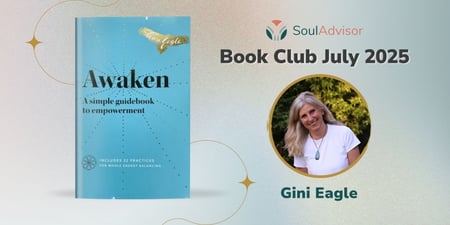
Gini Eagle's Mission to Help You "Awaken"
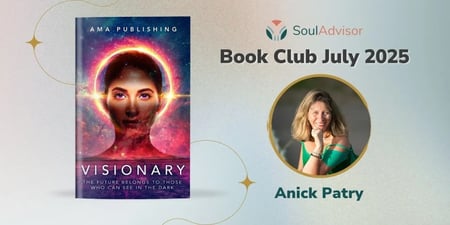
Anick Patry on How Writing Saved Her Life
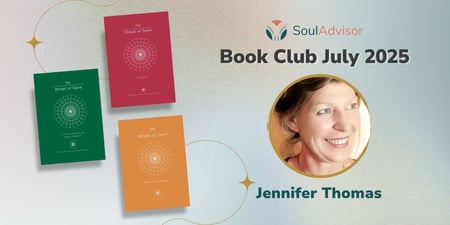
Jennifer Thomas on Food as Medicine and Intuitive Eating
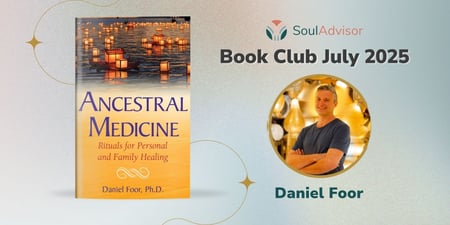
A Deep Dive into Ancestral Medicine with Daniel Foor
Angela Sciberras on Harp Music and Crossing the Veil
Pascale Osanz on the Hidden Influence of Color
Denby Sheather on How to Live and Love in Death
Peter Smith's Spiritual Approach to Storytelling