Angela Sciberras on Harp Music and Crossing the Veil

Join Angela Sciberras, a renowned harpist and author of "Death the Door," as she shares her profound journey of bringing therapeutic music to those in palliative care. In this deeply moving session, Angela recounts how a personal injury led her to discover the harp's unique power in comforting the dying, deeply influenced by her grandmother's final moments with music. She illuminates the intuitive approach of therapeutic musicians, using ancient modes to touch the soul and facilitate a peaceful transition, viewing death as a door to a wider cosmos.
Transcript
Cate: Good evening, Angela. How are you?
Angela: I'm so, so well. I'm wonderful on this very rainy, thundery evening. So, if you do hear a little bit of thunder in the background, Mother Nature is putting on quite a show here at the moment. So, it's wonderful.
Cate: Wow. It really cracked open. And you know what just happened right then was that my mentor Jumrumunjinbah Paul McLeod—I've just got back from traveling—and a little text just popped up to tell me his wife had passed on Wednesday just then. Just she was a beautiful, beautiful woman and an incredible artist and gave birth to five beautiful children. She was incredible. So just then it just popped up. Goodness, the chances, right? Ah, wow.
The Power of "Death the Door"
Cate: So we're talking today about your book, which I just love, all about your experience as a harpist and working next to four dying people, with dying people, in the midst of dying people. It is the most amazing book, Angela, and I just wanted to congratulate you because both that book and "They Sent Me Forth" are just such brave books. Really brave. They're so personal. Yeah. They're so personal and they're just so magic and they go deep, you know, because you're on a self-exploration journey when you're sharing with your audience and it's very, very triggering or very—I don't know how to exactly explain it, but it really takes one on a journey. So, thank you very, very much.
Angela: Oh, my deep, deep pleasure. Thank you. They're very kind words. I appreciate that. Thank you.
Cate: And welcome, Jacqui-May. Hello. To have you here.
Jacqui-May: Hi, Jacqui-May. Welcome to this cold Sunday evening for...
Cate: I know. So where shall we where shall we start? Shall we start with "Death the Door"? First, let's just talk about "Death the Door" because as I was just saying to you, Angela, we've—it's a great book, everyone. I don't know if you've had a chance to read it, but it's worth a read.
So I was just saying that in the context of this book club, there are six books related to death, dying, and beyond. So it's quite amazing and I guess you could also argue that a good number of the other books are also channeled or brought in. I guess therefore they cross the veil. Yeah, the veil. So I love both of your books, but I think I'd love to start on "Death the Door." Yeah.
Angela: Great. My pleasure. I guess I'll give you a little bit of context as to how "Death the Door" even came to be. I mean, it really is for all intents and purposes a tiny little book. Some may sit down and read it in an afternoon, really. But it took decades for it to become what it became. And some may not know, if you've read the book, you may. I was a musician first and foremost, from school right through to university. I did a degree in a Bachelor of Music and my passion was performance. I wanted to be the next Jane Rutter. I was a flutist and I don't know if you remember Jane Rutter. A lot of people don't these days, but I wanted to be Jane Rutter, minus being naked on a piano because I remember she had an album cover where she was lying on this draped on this beautiful piano.
Cate: She's just that woman. I know her. Do you? That's extraordinary.
Angela: I felt that flute was this extension of my body and being on stage it was—you know, anyone who's been a performer over time, whether you be a speaker, I don't care what it is, particularly if you're a solo performer—group stuff as well, but solo performance, there's something very individual about it and quite isolating in a way because you make a mistake, there you are. And I wanted that's what I wanted to do in life and unfortunately I had an injury in my second year, a tendonitis injury from probably the stressful way that I was practicing and playing at the time. And I had to put the instrument down for a period.
Around that same time, I started to, I guess, wonder were there any other ways that I could express music apart from full-time performance on stage and whatnot. And it was all about you, you know, like I'm a Leo on the cusp of Cancer. So, you know, we don't mind the limelight. And when that happened, I felt like I died. I felt like when that instrument was taken, I felt like it was taken from me because I could no longer play it at the level that I was playing. And I felt like this part of myself had to die and it was extremely painful.
A Transformative Experience with Music and Death
Angela: Around that same time, I had an experience with my grandmother. She was actually in her final stages of life and I had never actually experienced death before in that way. I'd been to a funeral here and there, but not in that way. So, I went and spent some time with her in her final days and we picked the flute. I picked the flute up. My dad at the time, he knew a few chords on the guitar and we played "Proud Mary." And my grandmother went from a vegetable in the chair, this sort of drooling shell of herself to almost like—the way I experienced it was like a marionette. It was like the music picked her hands up. She was part Irish and you could almost imagine she was about to pick herself up out of that chair and begin to dance. And it blew my circuits because I just thought what unseen thing or what power does music have that this woman went from literally not speaking, couldn't eat, to all but getting up out of her chair and dancing? And both my father and I were blown away.
That experience seeded something in me and I remember at the time, maybe a few weeks after, she passed away and then she was the first person I ever saw who had passed away. And it was a very traumatic experience because when we went to visit her in the funeral home, the funeral directors, whether it be my father's fault, he didn't—whatever, they didn't prepare my grandmother to be viewed. So she looked the way death looks when not every single person—you know, some people pass quite peacefully and they look quite peaceful, but often it's some people can find it quite harrowing. And when I went to see her, the only thing I can describe to you, it was like that painting, "The Scream," where the person's standing on that long bridge with their face wide open. And I remember just almost all but collapsing, seeing her this way and thinking to myself, she might as well be a log. She might as well be a tree lying in the forest because there's nothing left of my grandmother in this whatever this is.
As traumatizing as that was, what I didn't realize is that that was setting me up to help me to be with what death can look like. And then be with it when it counted, a couple of years or two, three years down the track, when I started to do palliative care work. And but it started, it seeded this thought, you know, what would this be like if I started to look at music?
From then on, and this has happened to me in many different avenues in life, things start showing up. Things that I have no control over, quite remarkably. And I started to wonder, well, I want to train in this type of field. But in Australia at the time, around 2004 and 2006, when I actually started training in what was called the Therapeutic Musicians International Therapeutic Musicians training program. There was nothing in Australia that really met what I—met my need. So I went and looked at things like Nordoff Robbins, but that was all looking at disabled children and I just thought this is not—as much as I really respect the work that they do with disabled children and it's remarkable, it wasn't what I wanted. That palliative aspect wasn't here.
From Flute to Harp: A New Calling
Angela: I had a client come in because by that stage I was starting to do a little bit of work with kinesiology, which is a whole other story after I couldn't play flute anymore. Kinesiology helped heal that. And this woman came in and her name was Julie Webb and she just so happened to say, "Oh, I work down at Westmead Hospital and I just so happen to be the first person in Australia to be doing an online course with Estella Benson, the late and great incredible my mentor Estella Benson, who is running this groundbreaking work on focusing on music and palliative care." And she said, "You should look into this." And I thought, I just couldn't believe that this woman came to my house, was lying on my table doing something completely not associative to music and the next thing we know this ball started to roll and spoke with Estella and she agreed to train me. And I trained for probably, it took about two years to do her training course, which was online at the time.
At that time, everybody thought anything online was complete rubbish and you must have got your qualification out of a Kellogg's cornflake packet. And we look at today and you think she was a pioneer. A pioneer. And we would, you know, musicians all over the planet with our earphones on listening to one another. Someone would be in England and I'd be, say it was Cate and I, from one side of the planet to the other. She would close her eyes, I would close my eyes, we would connect with one another and then the mentor would say, "Angela, I just want you to play something. I want you to—you might have an image. You might have a—I want you to play something." And I'd start playing, think I'm going to play this song about "Rose Garden." The next thing this woman on the other side of the planet would say, "Believe you just played that. I'm actually sitting in a glass house overlooking my rose garden." And these sort of incredible things would happen. So I did that training.
I did most of my training work. We had to do a minimum of 200 hours bedside with palliative people to be qualified, plus all of the normal qualifications you'd have to do in health and wellness with anatomy and physiology. And at that time there was a lot of resistance to this work because we did work quite differently, quite intuitively and it was focusing on one-on-one. And that was very unique at the time as music therapists. As powerful as that realm is and that genre is, there was a lot more looking at plans of what outcomes could be during a session. Whereas we as therapeutic musicians would walk in. I liked to walk in without any music because I didn't want to focus on the page. I wanted to focus on the body, on the person. And it was quite unique that we would work in and walk in and then use a lot of our skills with ancient modes, ancient keys that we were trained to understand would affect the body in a certain way. So it was quite new at that time and groundbreaking.
Cate: And incredibly brave that you took up the harp to achieve what—to achieve. So you were a flutist, but...
Angela: I was a flutist. That's right.
Cate: And then you completely changed instruments to achieve what you felt was needed. So that was a great act.
Angela: Well, it was because I was lucky because I'd had a lifetime of music training. I could read music. I could apply the skills to learn a new—I had piano skills. So you kind of went from this to this. Very similar in that way, but still completely different instrument.
The Julie Webb that I spoke to and acknowledge as being a big part of my journey, she was a harpist and I'd never even thought or, you know, who can even get access to a harp? You just think, where do you get a harp from? And I went in for two or three of my initial experiences at the bedside and recognized that the flute just wasn't going to be suited in a palliative care ward. Number one, people are sick. People are very sensitive to sound, light. They're in a lot of pain. So if you come in and the flute, as beautiful as it is, it shines in a lot of the upper tones. And I found that if I was trying to stay down in the lower registers, I had nowhere to go. There wasn't a lot that I could do with those lower registers to really move people. And I thought, "Oh my goodness, what am I going to do here?" Because literally some rooms I'd walk into and I felt like, you know, particularly someone if say they had brain cancer or terrible headaches or pain, they would want to shove that flute where the sun does not shine. I can tell you and I could understand why because the frequency just wasn't quite right.
So Julie just so happened to have—she had another little lap harp and she said, "Look, take it home and see how you see how you go with it." And I sat with it for about six weeks. Got up at past 5:00 in the morning every day and just would spend three or four hours just teaching myself actually how to play the harp. And my very first experience of going in and doing a bit—okay, I'm ready. I'm just going to go in. I played a very old English piece called "Richard the Lionheart", one finger. And it was terrifying because I thought, "Here I am. I'm a fully qualified, you know, 15 years on flute playing orchestral pieces and felt like just a complete idiot walking in with this instrument." And yet the instrument, the harp, there's something very special about it in that it just says, "Just put your hands on me. Just put your hands on me. Let me do the work. Stop making a to-do about it and put your hands on me."
And you know, sometimes it would take me after coming from the traffic and driving, I'd come onto the palliative care ward and sit at the nurses' station for 30, 40 minutes and just play and practice a couple of pieces or—because that's, isn't it, that coming into the zone when you're a therapist is just such an important part of it because otherwise, you know, not being there means it's not going to work.
Cate: So, no. And I'm imagining that when you're working with people who are passing, the sensitivity is huge. You know, you're working with their spirit as much as anything else. So, absolutely. Really would have to. And I'm sure that was good for the nurses, too.
Angela: They—well, it gave me some time around the nurses' station to settle into myself, get myself from being in the car and because it would take me sometimes I would come from Penrith out to Kogarah, which, you know, you'd be frazzled, whatever, parking. And the harp also, as much as it was very kind to most people, you could lay it on the tiny harps that I play, you can lay them on the chest of a person who is in the bed. They're lightweight. They can strum them, play them. Doesn't matter what they're doing. Yeah, it all sounds beautiful.
But it's also that instrument, if you try to sit down and dive into it, if you dive into it and you're not in aligned with—there's something about that instrument if you try to dive into it and you're not—you're still in your car or you're thinking about your bills, you just—it's like it kicks you off. It's this really strange experience where you feel like you can't, you're disconnected from what you're trying to achieve.
Cate: I think you did such a beautiful chapter about what the harp means to us, what it means in terms of the symbolism of the harp, but also how it's been used forever and ever with us, with humans and their relationship to the divine, the celestial realms, etc.
Angela: No, back in the day, I actually made a lyre for in a—
Cate: Wow. Yeah.
Angela: I made one for my two liars, one for both daughters. And it was really a precious experience of relating to the curve of that instrument. It's not that, but you know, it's pretty hard on a lyre. Exactly.
Angela: And I think, you know, the harp is one of the closest—the cello is another—that are closest to the frequency and vibration of the human body, which is why it just really moves people. No matter what you're doing with it, whatever you're playing could be something as simple as my little, you know, "Mary Had a Little Lamb" and yet people feel moved by it and it was just so kind to me that instrument and I think I'd love to—I have a very short story of that actual moment if you would—yes, please allow me.
Joy's Philosophy: A Story of Connection
Angela: It was a beautiful woman. It was my first experience with the harp on the wards. Her name was Joy. It's quite a short story, but I'd love to share it with you.
Cate: And love to. I mean, you've got another half hour to play together, so you can read as long as you like. We'd love a bedtime story.
Angela: Excellent. Wonderful.
"Joy's philosophy. The Holy Spirit is our harpist, and all the strings which are touched in love must sound." It's a 13th-century by a 13th-century mystic.
I remember being so incredibly nervous. I had only been playing the harp for a short time and I literally knew two songs. That was it. I was panicking because I thought I would be boring and sound amateurish. As I was led into the room, Joy smiled at me, so very happy I had come to play for her. As I played, she repeated, "It's so beautiful. I feel so relaxed and soothed. Thank you so much."
Eventually, I settled into the moment, and I relaxed enough to move from this simple tune that I had practiced so hard to something I'd never heard before, a song just for Joy. This would prove to be the first time I would truly enter the stillness of music and tap into something powerful. As the first simple notes entered the quiet stillness, I just knew something very different was about to happen. The sound was somehow alive with energy, conveying a manner of beauty beyond anything I had encountered previously. It seemed as if the melodies were speaking directly to her soul, revealing unexplainable truths and touching her deeply. She wept.
I closed my eyes to try and absorb as much of this moment and the music as possible. Time seemed to stand still. In this moment, I felt I was becoming what can only be described as one with the music. Music so simple yet so hauntingly beautiful, it wakened a realm of experience within me I had not known possible, especially as a so-called amateur harp player.
"One more for the road," I would say as Joy smiled and silently clapped with pleasure. I played for this lovely woman a few times right up until her death. She even wrote me a letter telling me how much it meant to her that I played for her, calling me her angel. Even after the music had faded away gently, we sat in the silence dwelling in such a profound awareness of the inherent wholeness of that moment. No matter how unprepared I felt, no matter how inexperienced, no matter how amateur, this moment was whole, and so were we. Even the stark contrast of the reality of Joy's illness that would lead to her death within days of our meeting, there was a peace that passes all understanding.
Looking back, this was to be the first of many experiences being inspired by music. Now truly understanding the true evocative power that opening oneself up to the present moment could bring. A new dimension opened in my life with the thrill that the vibrations of musical sound could bring such transcendental experiences for the person, their families, and ultimately me.
I was surprised to receive a phone call from Joy's son, who invited me to play for her funeral, knowing how much the music had meant to her. He even sat in on one of her sessions, watching as I sat by her bed, glancing at her through the strings, her eyes closed, face glowing, and smiling the whole time. She would often say, "I don't want to go to sleep. I just don't want to miss a moment."
I remember the shock on her son's face the first time we met. I had been playing for Joy for some time, and each time she saw her family, she would describe the angel with the harp who had come to play for her. Her son laughed when he explained that they had all thought that it was the drugs and that she was seeing things. "Fancy seeing an angel with a harp," they laughed. They were all pleased I was indeed real.
The day of Joy's funeral, the family asked me to play what they like to call a musical farewell. I picked up the harp and walked towards the dark wooden casket covered with bright yellow flowers and gold fittings. Perfect for such a bright person. The chair that had been prepared for me to sit in stood at the front facing the family. As I approached the chair, I felt led to make a change. I stood at the front, thanked everyone for inviting me to this sacred occasion, and then moved forward to sit down.
"No, I can't do it this way," I thought. I looked at the floor for a moment, then the casket, then back to her son. "Would you be offended if I turned my back to you?"
Completely understanding my request, her son looked at me, closed his eyes, a tear rolling down his cheek, and then he took a deep breath, saying, "Definitely, it's the only way to do it." I nodded and glanced down the line of family who were smiling and crying, thanking me with their eyes.
"I had a certain relationship with Joy when I played at her bedside. It was all about her, and I would like it to remain this way," I said, as I looked upon the many mourners who probably did not understand my strange request. They nodded with understanding as I picked up the chair and turned it around to face her beautifully adorned casket.
I took a moment, said a silent prayer, and noticed the light shining through the stained glass windows behind her. The streams of yellow filtered down and danced in the warm walnut wood of the harp. I closed my eyes and was overjoyed to see her face smiling at me in anticipation. No longer did I see the casket, only the apparition of peace, just as if I were with her again.
"One more for the road," I said to her and to myself. I know, she would have heard. I cannot tell you what I played or for how long. All I know is that this was the first time I wept at the harp. Not because I was sad, but because I was so honored to be playing for her. Music and sound weaving a magic carpet for her soul's journey home, acting as a bridge between life and death. In my mind, I saw her smiling face and swirls of what seemed like sparkling fairy dust spiraling towards the rays of bright white light beaming through the windows. As I plucked the final string, there was peace. It was finished. Finally, I wiped my tear-stained face and sat in silence. The silence seemed to go on forever. Then I came to and turned around to face a crowd of people behind me. As I stood, the whole room leapt to their feet, clapping and cheering loudly. It was the most surreal experience I'd ever had, especially at a funeral. They were not clapping for me. They were applauding the life of Joy.
Cate: That is so glorious. And you know what? I'm going to request that you read a little bit more about the story of when you went back to the nursing home or palliative care unit and talked to the other people in her room. Was that part of my story as well?
Angela: Yes, it was. So, I went back a week later. These women were actually in a completely different room. They may or may not have even had conversations or whatnot over that time. And obviously Joy would have ended up in a room on her own at some point, but certainly when I went back maybe a week later, let me go into—
Cate: You've got a great memory. It was pretty striking. Her funeral was striking and it would have meant so much to the people that were there to feel her presence. Yeah. Yeah.
Angela: And it was for me as a musician and a performer, you always face the audience. And so it was a very odd experience and normally you'd sit and play for the audience, but I thought, well, you know, when I sit at the bedside, I would come up right close to the person, beside them, facing them, watching them. And I thought this just feels really weird playing to—it just felt really weird playing to everybody else. And so it must have been odd for everybody at that funeral to see me with my back to them playing to a casket. But it was actually just the most wonderful experience I'd ever had. And her friend's name was Jill.
Interconnectedness and the Thin Veil
Angela: "Even though the relationship with those who are dying and their families is relatively short, it seems that the lack of time encourages me to become closer to others. One is willing to cut the crap, so to speak, and get to the core of things. One is willing to be open to love and be loved by others. It is a shame we wait for such a long time to do so. I often find myself saying to families that have lost loved ones in my presence that I'm so very blessed to be a part of the most sacred moments of their lives. And I find myself going home at night and appreciating my loved ones and life so much more. I'm grateful for their openness and for allowing me into the space that is so very sacred."
What basically happened, to cut the long story short, is that when I came back into the hospital, Jill told me what I wore to that funeral. She couldn't go. She's obviously palliative and I think she only lasted another week or so herself. Her family did not go to that funeral. And yet she told me word for word the color top that I had on, the music that I played that day, and how much Joy enjoyed it. And those little types of things would happen where I just think there's no way she could have known. There was no possible way she could have known that information. And so it just shows that interweaving and that interconnectedness between people. And that thin veil. I mean, you asked her, "Who told you?" And she's like, "Yeah, Joy." And I'm like, "Of course she did." You know, like, she looked at me as if I was an idiot, you know, like, who do you think told me? So and those kinds of things would just happen so regularly over a long period of time. And Joy is one that I remember really fondly because it was that first experience.
And I just feel like over time I've had these mentors and my grandmother was my first because experiencing that death, experiencing it in all its rawness. I remember one of the first couple of experiences that I had with someone who was very close in what we would call active dying. This particular woman didn't have any family and often it would be a real privilege to go and sit with these people particularly in the active dying stage. They can't communicate with you. They can't tell you what types of music they like to hear or give you any type of feedback. But we are trained on a very deep level to look at skin color, what the hands might be doing, whether they're tight, whether they're unfurling, whether they're gripping their sheet, what their breathing to help in trainment so that we can help to calm if they need to. We weave in and out of different modes until we notice that these things start to change: the skin color, you know, it could be one tear rolling down their face. Even though there's nothing else going on, you'll see something change. "I'm in the right place." And you dive into that.
Administering Healing
Angela: It could be diving into something, having that intuitive ability to know, because people would say, "Well, you don't want to upset them." But sometimes they've laid there being so stoic and strong because they don't want to upset their families. They don't want to cry in front of their families and express that they're afraid. And I'm this stranger that comes in with a harp. And all of the emotion gets to come out. And so if you saw that pain start to come, you'd be able to lean in with the right mode or the right music and obviously not leave them there. You would then turn it around, bring them out, and then they just feel, "Oh, this—I just feel so much better. I feel a weight off," or whatever it is. I'll put the harp down. And then they would then spend an hour telling me about their life. Most of it was just cracking them open to the point where you would then just put the harp down and they would just talk about what they're afraid of or—
So this particular woman I'm talking about that I came in, she was—she wasn't conscious anymore, but she looked exactly like my grandmother did, you know, when she'd actually died. This woman was still alive, but it was that mark that death can—that sort of that look that can come across a person. And I just remember sitting there and all of the triggers and all of the emotion and feeling that moment, going back to that moment with my grandmother and then just being able to sit and go, "You know what, the beauty, just keep come back to the beauty. Be with this, like witness it, witness this woman and just allow the music to just be with her, sit with her."
And I just realized that day as I drove home and just probably—I can't tell you how many times I drove home probably in tears talking to all my crew on the other side helping me just saying, you know, I didn't know at the time, but my grandmother gifted me, as hard as it was, she gifted me a great ability to be with that woman and face what death can look like. And from there, the dying just kept teaching me how to be with the dying and giving me permission to ask really hard questions. Sometimes I would say, "Oh, do you mind if I ask you a question?" And they would invariably be very happy if they were still communicative, very happy to tell me how they felt. And you just left there feeling like life was buzzing with so much more vibrancy because you just understand how vulnerable and fleeting and out of control it all is because most of them would be some—they're not all elderly. Most of them were people in their 40s or people younger than that who last week "I was like this" or last week "I was like that" or didn't expect that this is where they'd be at this time. And so you—yeah, they taught me how to ask really difficult questions and be with that.
Cate: You know, that reciprocal relationship that you—I mean, for starters, to go in there when you're just starting in a profession or way of being for two days every week, massive thing to ask of yourself because correct me if I'm wrong, but primarily that was voluntary, right?
Angela: Primarily. Yeah. For the first few years in particular. I mean, I was training so I guess I didn't really expect to be paid, although I was at that point a master's—I'd done master's—almost six years of a degree and was a master at my craft, but felt like I was coming back to the very beginning of what it meant. And now suddenly the thought of being on a stage and it all being about me was just became very foreign and I felt like everything I just had to start to become a part of the environment. I didn't want to be a performer in there. I didn't want to be something that—I wanted them to sit up and watch because they don't have the energy for that. Yeah. I wanted them to feel like they could just meld into or be uplifted. Every now and then you might have had three little old ladies with a cup of tea. Well, that's different. You know that you're there just to uplift. But often the people that are on a difficult journey, you knew you were there to actually administer healing or medicine to them, but not so much as "I am the healer" but as much as almost affecting the environment in such a way that they could access their own healing.
Cate: Yeah. And yeah. Beautiful. I came—one of the themes that keeps cropping up in your book that you don't really mention, but you keep saying, you refer to, is feeling upset that people rejected you or made a statement about—and then, you know, your own personal journey of going to, sorry, I'm not going to pronounce it properly, Ho'oponopono.
Angela: Ho'oponopono. Yes, yes.
Cate: And other different modalities to seek answers as to why this was affecting you and your need to grow so that it no longer was personal anymore, which is again that movement away from being the performer where people make judgment, they clap, don't—into being of service. Totally. So it's fascinating.
Angela: Yes. Journey, you know, like, and it is. It's quite triggering and particularly as an artist, we live for the applause and we live for the positive feedback. No one wants to have a bad performance or to leave and someone have not enjoyed it. Yes. And so when you walk into a room where someone's facing something far more challenging to them than me walking in and getting a bad review, you know, there was probably of the hundreds of people I've sat with, there was probably three that were quite painful.
One was Michael. You imagine I've got the combination of: I walk into a ward, my name is Angela—strike one. I have a harp—number two. And so I'm kind of walking into a palliative ward where, you know, everyone's on this same journey. Most of the people—they have a very large palliative ward out at Kogarah, maybe 200 beds, something like that. And most of them are not leaving there. They know that. And so you walk in in this room and of course, "Hi, I'm Angela. I'm standing here with a harp and I'm going to be a mirror and whack you in the face with your reality," because people do, as you said about the associations, they associate angels, harps, heaven, dying—all those things are associated with those things.
So, Michael's one. I walked in, introduced myself, and he turned to me and said, "You must be sick. You must—you must be a sick person to walk in here and do such a thing." And I took a minute and just thought, "Okay." And then caught myself pretty quickly and just said, "You know what, that's totally fine. I totally get it. It's—I can go." And he caught himself and went, "You know what? I am so sorry. I have been so rude to you. Please sit down and play." I really wanted to run out of there as quickly as I could humanly let it. But he begged me to stay and I did. And I played and he sobbed. He sobbed and he sobbed and then I finished and he was genuinely grateful.
Cate: Yeah. Beautiful.
Lessons in Empathy and Perspective
Angela: Which was a lovely turnaround. But then I had another time where I just—I hadn't even walked into this woman's room and every time I walked past she would say, "There's that effing harpist." And I'm like, "I haven't even gone in there. Why is he so upset with me?" Or why is she so upset? And it really got to me in the end where I would—I would be in a hallway. A person would approach me and say, "Oh my God, what you just did in that room with my father was so transformative. We'll never forget it. It's changed everything." Blah, blah, blah. And at the same time, I could hear this lady in the next room saying, "That bloody harp is blah." And all I could hear was her. I couldn't hear the good. And I was almost ready to run down, throw my harp in the—they had a beautiful waterfall—I got a water fountain down south. I thought, "Damn people with cancer." You know, "I don't want to do this ever again. I'm here with my heart on my sleeve. How dare you be mean to me?"
And a few weeks went by and one of the mentors on the wards came to me and said, "Look, how are you going?" You know, because we did have people that would interact with me and it's happening. And I said, "Oh, this lady in room whatever." "Oh, she has a brain tumor and she does it to everyone." So, here I was making it all about me. Obviously, it had to be something I was doing to her, but she said the tumor makes her do certain things. She said, "Look, come down to the wards. You'll probably find she's hot and cold, like depends." She said, "Let's go into—" and I walked into the ward and walked into the room and she was delightful. But in that moment, you know, those lessons of like, actually it had nothing to do with you and here you are making it all about you for two weeks and really and truly it was nothing to do with you. Yeah.
And I think the worst one I ever had was in a four-bedded ward. That's where it can be very challenging if you're trying to hone in on someone particular and their issue, particularly. Some people need uplifting, some people are in pain. So, different modes, different sounds. Some people, you know, need something completely different. They could be angry. They could be whatever. And a nurse came to get me and said, "Look, can you please come in? We have a woman here who hasn't slept for days. We've given her everything known to man medicinally. And she's now in that—she's becoming very, very agitated, irritated. We don't know what to do. Can you come in?"
So, and I—I would usually be the last port of call where the nurses would come and run and grab me and "What can we do?" So, I sat down beside her and her son was on the other side and said, "Okay, let's see what we can do to help your mom get some sleep." So, I started to play and then I—I sort of motioned to him, "Maybe go down to maybe rub her feet or, you know, sort of help me." And maybe took 20 minutes, half an hour, and she started, you could see her eyes starting to roll back. And I thought, "God," and her son's looking at me, "Oh my God. For the first time in days and days, she's asleep. She's about to go to sleep." And we're almost there where this woman's about to close her eyes and go off into this beautiful deep sleep. And the woman diagonal in her bed on the other side of the room, yelled out as loud as she could, "You are—" what was the word she used? "Isn't that terrible? You are traumatizing me." Something like that. "You are."
And it was so grating because, you know, everyone else in the room is kind of just sitting back and enjoying the music and she was livid. She was livid. And I think if she could have got out of that bed and hit me over the head with the harp, she would have. But obviously whatever I was doing was stirring something inside of her. And I just turned to her and I'm thinking, "What do I do?" I feel torn because this woman's on the cusp of getting what she needs. Yeah. But over here's this woman's got a completely different need. Can I? And she's saying, "Can't you play something else? It's so dreary." And I'm thinking, "Oh my God." And the son's looking at me going, "I don't know what to do." So I just said, "Oh, please just give me two more minutes and then I promise we'll—I'll finish. We just want to help this lady." And she rolled over and was just red-faced and really, really angry. She didn't—she didn't even want to communicate with me when I finished. And I said to the young man with his mother, "I'm so sorry I couldn't." She did get some rest. But I just remember leaving that room feeling so triggered. And as an artist and as a musician, you never expect that. Yeah. And so it took so many, you know, I'd drive home, thinking, "I never want to go back on that ward again. You know, I never want to go back on that ward again. It's so confronting." And then you would just settle into yourself and go, "You know, get over yourself. You have no idea what news that woman got that day. You don't know what she was facing." I never saw that lady again. When I went back to the ward a few days later, she wasn't there. But there were times where it took great courage to go back on the ward.
Cate: Yeah. I think you're so brave. Like it's a highly potent time, very intimate, very meaningful. So important how people pass over, you know, and it's so important. So, so important. I'm just going to open this up because we'll spend another—we've only got another few minutes, but I'd love Martine and Jacqui-May, if there's anything that's, of course, that you guys would like to say, please do.
Soul Healing and New Connections
Jacqui-May: That was so special. Yeah, I think you are like a soul healer, like you really heal the soul. It's amazing. And you know, they have—I've just been to a conference on death and beyond death.
Angela: Oh, fabulous.
Jacqui-May: And there was a lady there doing, you know, they have a birth doula and she's a death doula. And beautiful work like you're doing with the music, she's doing with different thing, but yeah, I'm not sure if she knows about your particular way of handling death and beautiful way and maybe it'd be good to maybe connect and let her know what you're doing as well.
Angela: I would love to hear who that person is. Like a society or something or some name.
Cate: Yeah, I think we can connect with her, Angela, because yeah, beautiful.
Angela: That would be wonderful.
Cate: I'm actually surprised you weren't there, but it was their very first conference and I couldn't make it because I was traveling. But Martine, it sounded amazing.
Martine: Yeah, they did it in the Hordern Pavilion, which was incredibly bright.
Angela: Oh, how wonderful.
Martine: They had 1,500 people come, which is great, but, you know, and they want to keep building it. And you and I will talk afterwards, Angela, and I'll introduce you to David, who started that. So that was wonderful.
Angela: I know years ago when this very—it started around sort of 2006 is when I first started. I did a lot of speaking at the Australian Palliative Care Association, New South Wales Palliative. A couple of years ago, I spoke at the Oceanic. I did a lot of speaking for a little while. And then I suppose, you know, my dad died and that's a whole other doula-ing experience, and then COVID, and we had all this kind of stuff. And so there's been a little bit of a—I've done a lot of private, because people just know out there in the world, they somehow get a hold of my details. And I've even had a woman maybe only 12 months ago—I'd come to see her brother at home and play for him. He was a physician, actually passed away last year. And sat with him and played with him in a house at North Sydney. And then we were—we were meant to come into a hospital and play for him on a particular day, and an hour before I was meant to leave home, she called me. She said, "Oh my goodness, Angela, he's just passed away." And I thought, I said, "That's totally fine. It's okay. We didn't get there." She goes, "But wait, no. Would you come anyway?" And I said, "Are you sure? Like, don't you—do you need this time with him now and your family?" And she said, "No, no, we want to lay vigil." And so, okay. And I mean I've watched dozens of people bedside, people around, watched someone die, take their last breath, watched it all. But I'd never had someone say, "Well, no, actually, yeah, they've—they've actually gone, but we really—we recognized we want you to come." So I came and he was already passed and the family was sitting around and I played to the—even though he was there passed—and it was just extraordinary. So I get a lot of that sort of work now, a lot of private stuff.
I know Nepean Hospital I think this year or next are about to open a very specific palliative-focused center. So I've sent a few emails off to them to say, "Hey, you know, it's close by to me these days." Going out to Kogarah, as much as it's—I spent six years out there on and off and I've spent time in Westmead and a few other different hospitals, but just the huge travel costs and things that it takes you to get out to those places. So, I'm hoping that that door opens in the next 12 months or so, close by.
Cate: Be wonderful.
Angela: It will.
Cate: People need you. Definitely. Wonderful. Sorry, Jacqui-May, do you have any questions before I ask one more question?
Jacqui-May: I guess I've read a lot about this over the years. It's something that I've been drawn to, but just loved hearing about it and learning that it's becoming more available, more mainstream in hospitals and people are starting to learn that it's available for them as well. It's definitely something I'm going to remember.
Synchronicity and an End of an Era
Jacqui-May: There's a wonderful, but just to go completely in a different direction, I bought your other book.
Angela: Did you? "They Sent Me Forth."
Jacqui-May: There was something about the elk on the front that reminded me and I just wanted to mention, I haven't—I've only just started to read it.
Angela: Oh, wonderful.
Jacqui-May: That I have a client who's in her 70s and she was a student of Donna and Mary's. I couldn't believe it when I started reading that at the beginning of the book.
Angela: Serious?
Jacqui-May: So, I just wanted to share that.
Angela: That's right. Donna and Mary Davis. Yes. Oh my. She would go down to their house in Kiama and oh my goodness, they—they sort of rescued her from a serious domestic violence relationship, her and her son, and she became, you know, part of their little group and just spoke so highly of them so often.
Cate: Insane. Such a small world.
Angela: Yeah, they were—they're wonderful mentors and dear, dear friends. They're just—they're amazing. That is—thank you for sharing that, Jackie. Lindy will be blown away because Lindy is Donna and Mary's—
Cate: Let me just say, Angela, we're intending to invite you back to do the other book because we're doing a book a month now.
Angela: So, I would love that. Oh, please come back, Jackie. Come back for that one.
Jacqui-May: I will. I've read it. Oh, I've read it all. Yeah. But there's—there's already a few synchronicities for me in that book, and you talk about, you know, you talk about that a lot. So, and I'm so sad. I'm so sad.
Angela: I love that. That's so wonderful. I love that. And just touching very quickly on that book. I'm so sad. You would know, Cate, if I say one of my dearest mentors on that journey, Uncle Greg Sims, he passed away last week.
Cate: Last week. Oh, wow.
Angela: Yes, he did. We had his funeral Friday and I saw him a few days before he passed. You know, I haven't posted much or said much online because it actually is a little bit taboo. A lot of different mob don't like—once someone has passed, they don't like you posting pictures or saying their name actually, even because they believe that it pulls them back from their journey. So, I haven't even posted anything because I felt like I didn't want to disrespect the community. And you'll read more about Uncle Greg as you read along, but he—he's now, I'm sure, guiding me from spirit and but it's sad to hear that that wonderful elder has passed away. So, almost like a—it's like an ending of an era. A lot of these wonderful—
Cate: Yeah. Incredible leaders and around reconciliation. Such a leader. I have utmost respect for Uncle. He came and did the welcome for us at the office actually. Yeah. Yeah.
Angela: When we did a big—I think we had—I don't know, I can't remember actually, but it was thousands of people there doing yoga and he talked to me a lot. And I went to a number of gigs with him about—he talked about the Whale Dreaming and walking bridge and painting of—and he—he's just been such a beautiful man that he has just—I can't even tell you what an impact he has had on Western Sydney in particular around reconciliation. And you will like this story—when we went to the graveside. He was buried in at Eastern Suburbs Memorial with his father.
Cate: Okay.
Angela: And of course, Whale was his totem, or one of his totems from that family line. And he was buried in a spot just that looks over the bay. And we're all standing there and we completed that part of the thing. And then we turned—we're looking at the bay and this huge whale tail came out and smashed into the water and everyone just went, "Oh my God, Uncle!" It was just amazing. And he just had this wonderful sense of humor. The last thing he ever said to me just—I mean, I—I don't know. I just love being in those moments where it's just these juicy moments of like intensity and and he was still very committed to being here. I can tell you right now. And I said—I said, "Uncle, is there anyone around? Are you having any visions? Are you?" And he said, "Yes. All the uncles came to me last night," and I won't tell you what he actually said because it's a little bit exploitive, but he said, "And I told them to get out like this." And I said, "Did—" He said, "Yeah, I said, 'Get out! I'm not ready!'" And I said, "Where are they now?" And he said, "Standing in the corner room." And I said, "Stay over there!" So he was, you know, he knew they were coming and he was telling him he was not going. So, wow. But yeah, he was just a beautiful man and it's a beautiful life that we've all got here, out there. The thunder and the lightning's just this low behind this computer right now. And, you know, it's such a blessing to be alive. I can understand not wanting to go, but having people like you in the world who help us do it properly and consciously is just a real gift. A real gift.
Angela: It can change what I know is music presence. Even sometimes I may only be 10 minutes apart, but it's that something to focus the energy in. Yeah. And then just that witnessing—you would see a moment turn from something that's traumatic for not only the person—often once someone actively is in that dying, they're not really experiencing the trauma anymore—but the family is. They're traumatized by how it sounds, how it looks. And when we can use that entrainment to calm them and drift off into passing, it just, you know, at a whisper's breath, it just changes everything. Changes everything.
Cate: It's a huge gift you've got there. And I—
Angela: Thank you.
Cate: That whole statement of, you know, we're a spirit having a human body, sorry, a spirit having a human experience is true. So to me, that having the harp and that music around them reminds people of the wider cosmos that they're moving into. It's beautiful. So, thank you.
Angela: It is my deep—it's been an honor to be on here with you today and thank you so much for inviting me. I just cannot thank you enough. And Lindy will not believe what you just said, Jackie. Like, truly will not believe it. So synchronistic and amazing. Thank you for sharing that. I'm so grateful. And thank you. Thank you both. And thank you, Martine. Thank you both for coming tonight. It's wonderful.
Cate: Thank you, Cate, for the invitation. You're just such a beautiful soul. Thank you. Well, I'm hoping we can do it all again in another few months.
Angela: Can't wait. Cheers.
Similar podcasts in Book Club Series July 2025
Jacqui-May Bridge on Using Vibration to Facilitate Wellness
A Guide for Life After Loss with Joy Fairhall
A Guide for the First Six Weeks with Yolande Hyde
Gini Eagle's Mission to Help You "Awaken"
Anick Patry on How Writing Saved Her Life
Jennifer Thomas on Food as Medicine and Intuitive Eating
A Deep Dive into Ancestral Medicine with Daniel Foor
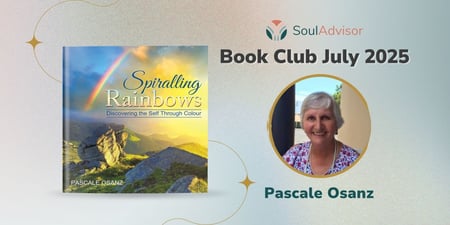
Pascale Osanz on the Hidden Influence of Color

Connect with Your Ancestors with Hazel Volk
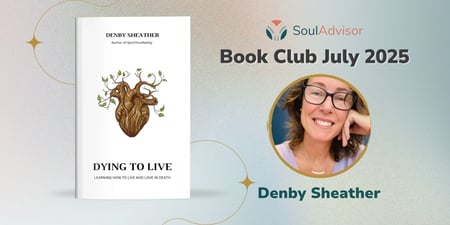
Denby Sheather on How to Live and Love in Death
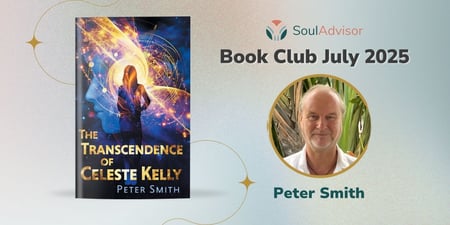
Peter Smith's Spiritual Approach to Storytelling