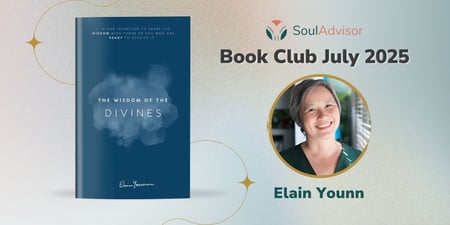
A Guide for the First Six Weeks with Yolande Hyde

Join Yolande Hyde, author of "A Yogic Guide to the First Six Weeks After Birth," for a powerful discussion on navigating the profound and often challenging first six weeks of motherhood. In this insightful session, Yolande delves into the transformative journey from maiden to mother, a time she describes as "lost in the woods" and a "soul evolution." She shares her personal experiences with postnatal depression and the inspiration behind her book, which provides new mothers with a yoga-inspired raft to navigate this intense transition. Yolande emphasises the need for new mothers to be held and supported through this sacred time.
Transcript
An Introduction to Soul Evolution
Cate: Good evening, Yolande. Good evening. Thank you for having me. It's such a—what I want to say is—a beautiful, well not relief, but a lightening of what we've been doing this month, because a good number of our practitioners and authors have been talking about death and the end of life and ancestry. And your specialty is the first six weeks of life. There couldn't be anything fresher. That little green tiny shoot that's a little human and it's a little mother, and you know, it's so fresh and so new. So, thank you for joining us. Thank you. And of course, you know, the whole idea of birthing something can't ever be separated from the death of something else. So, we're moving in the same current, different language.
Yolande: Yes, absolutely. And may we never reach that point where people live eternally. What a horrible concept that we've been playing around with as a...
Cate: Yes. Well, we do live eternally, of course, as we know, but we are in constant evolution of that form. And yes, to be, you know, stuck in one evolutionary manifestation would probably be your soul's worst nightmare. But funny that we think we want it, you know, like in this egoic, most egoic of all ages, really.
Yolande: Yeah. I think it's that whole thing of thinking that everything has to happen on this timeline. And when actually, when we start working from a multi-dimensional, multi-timeline experience, then we can cut ourselves a little bit of slack, like, "Oh, I didn't quite get that. That's okay. I'm going to come back. I'm gonna do that one again. I got all the time in the world. I'll try it next time."
Cate: Yeah. Yeah. I'm so gonna do that next time. So, and you know, every day is so full of potential, isn't it? That it's hard not to—thank God we've got a long span through this universe and we come at it from many different angles. And I think, you know, how exciting that there's all this potential, all these pathways, all these ideas to follow as we move on. But you followed one that was really very much your own initially, you know, your own process of going through the birth of three beautiful children. And I can vouch for those children. And then coming into exploring that as a birth doula and then coming into your authorship, which is a whole different level of maturity of sharing out to the wider world. So this beautiful book, Soul Evolution, is exactly that, you know, it's really talking about, here we are, we're six weeks old or you know, zero to six weeks, and we're coming in, and the mother who happens to have brought you in is going, "What have I done?" Yeah. So I love that you've provided a bit of a raft. I see it as like, you've thrown them a piece of wood in the middle of a raging torrent and said, "Hang on to this." Please talk a little bit about your own experience as a mother first of all, because I think that sets the ground for what you've written here.
The Genesis of the Book: A Personal Journey
Yolande: Well, thanks for framing it like that because I think, yeah, I feel like that was really the intention behind the book. So I'm glad that it transferred. And, you know, you so recently becoming a grandmother, and I know that, you know, you shared this book at that time. And so, yeah, I didn't have an experience of mothering in the normal sense of things. And so I grew up a bit, you know, motherless, and so when I became a mother myself, I really didn't know what I was doing, and I hadn't been particularly drawn to children. I didn't feel particularly maternal. I didn't have a great desire to have children. But I was, you know, had that, "Oh my god, I'm, I'm pregnant" moment. And along came my first daughter, Oona. And I felt a little bit at that time like everybody just sort of... I delivered the baby. There was lots of resource material for taking me into the labor process and perhaps what that might be like. And there were classes you could attend and lots that was happening. I mean, okay, let's frame of reference, we're talking 1996, so we were still very face to face with that stuff and relying on books. So, no internet. And I felt like I had a baby, and then everybody just switched the lights off and went home and left me carrying a baby. And I'm like, "I don't know what to do." And it was really out of that place of being so profoundly lost in the woods that the book really was seated.
It took 15 years of working as a birth doula, which I think in part was my own way of coming to heal some of these wounds. I had 12 months of postnatal depression with my first daughter, and what brought me out of that period of postnatal depression was that I fell pregnant with my second. And it was like, "Girl, get yourself together, man. You, you got to do this all over again." So, yeah, it really... I think with anything soul deep, it comes from a soul wound. And we speak of the light when we've journeyed into the heart of the dark, and it's the hero's journey in, you know, Joseph Campbell's terms, of bringing... It's Characlo and Chiron. It's about taking the wound and turning it into the medicine. And this was my offering to that particular wound in myself. And I really, you know, being a yoga teacher also, I feel that's happened for so many of us as yoga teachers. We've taken the wound. We've gone, "I got to get through this somehow." And we've galvanized our body and our mind and our soul and our breath and whatever it is through our yoga training and then our yoga teaching to come to some kind of way of integrating what we've been through and therefore being able then to take it out and share it with our yoga communities.
Cate: Yeah. So the way that this all works is that we're just having a little bit of a chat with Yolande. She's going to do a bit of a reading from her book and then at the tail end we've got time for questions and answers and discussion and bringing us all together. So, yeah, just letting you know. Okay. All right. So, Yolande, there you were. You've been through one, two, and then followed up with three births just to make sure you had it. And then you've gone on to be a birth doula and done that one-to-one beautiful relationship stuff that happens in a doula experience. And then you've decided to go out into the public world and bring your book. So, why?
The Power of Community and the Abandonment of New Mothers
Yolande: Gosh, no one's ever asked me that. I guess it's one of those paths that we follow. It's like the trout fisherman, right? And he's in the river and he steps from stone to stone to stone. He doesn't even look down at his feet all the time, but just trusting that the stones are there. And it was a path a little bit like that. So for context, I guess because it is a yogic guide, I do need to also say that, you know, I'm 30 years a yoga teacher and practitioner. And I think that working prenatally with women and postnatally with women in a in a class situation and individually, I think that was the catalyst for the why. Because you can take... one can take one's own experience and go, "Well, you know, yeah, that was it in a nutshell," and I'm going to do the work to transmute that into something beautiful. And I do need to say that, you know, my three children are three extraordinary adults now. But when I started working prenatally with many women, you know, so then you, then you're working with 20 women a week and that's a lot, you know, and you're starting to realize, "Oh my God, my story is not so dissimilar from yours and yours and yours and yours." And there's elements of this, and that all these women feel abandoned somewhat. Maybe that's too big a word, but there's a sense of abandonment at that moment of birth where everybody goes home and then and all the books say, "Well, just don't do any yoga for six weeks and just rest." And it's, it's like, my God, this crucible moment of the shift from the from the maiden to the mother. It's a literal dark night of the soul. I think if you cross it with any type of intention, you're going to feel it so deep. And and yet, culturally right now, we abandon women at that stage. And that is probably the answer to the question of the why.
Cate: Wow. So it really literally is like giving people a way, you know, as a pathway through the dark to follow because, you know, we know as yoga teachers, coming back into our body, mind, spirit, soul, breath connection is the way through. And you know, it is, it's, it's always about going in, not going out, isn't it? And couldn't be a more internal time when you've got that baby and you're looking straight into a little set of eyeballs and you know, have a partner and they've had to go back to work and the world keeps turning and you're there holding that little being and you're there thresholding. You're there crossing the biggest and most profound shift that a young woman will navigate. Most young women, that's the biggest shift they've had to navigate so far if they haven't had other big thresholds like, you know, the loss of a parent or something beforehand or something significant that they haven't that has been initiatory. But we're just culturally so bereft of the juice of those thresholding moments and we push them to the side and we medicate them and we just we go, "Oh, babe, you know, like just go do a start a boot camp and focus on getting back into your jeans." It's like, my God, that just could not be any further from the rich... as I said that word, crucible, you know, it's, it's, we need to find a way culturally to nourish women through this stage and then I think we would find that we would have extraordinary outcomes in terms of generational healing if we could. But anyway, that's a long way ahead.
Yolande: Well, that might be book two.
Cate: Yes, please, please do write that book. And I don't think it's that far ahead. I really think that, you know, along with understanding that here we are on this planet and every rock, every tree, every cloud is listening to what you say, your thoughts, you know, that this is a conscious being that we're living on and we are consciousness itself. So along with that understanding is coming an understanding or an increasing self-respect. I think that's part of the healing and the self-respect understands that if when you're born, you know, it's like this incredible being falling to Earth, plunk, you know, it's like a raindrop and then from that raindrop, boom, boom, boom, boom, boom, spread out those beautiful vibrations. But when it first hits and they, and you come down that birth canal or you come out of the tummy and here you are, then those little vibrations, the way that you feel those are going to impact all the other vibrations till you pass on. You know, like it couldn't be more clear. And so why wouldn't we spend everything, all our intention and all our focus on those first six weeks when this little tender being that you're nourishing is just like all completely receptive? Yeah. Completely receptive. So it's beautiful and that means, you know, then of course, we've been living in a patriarchy in case no one noticed. You know, we've been living in a patriarchy, and so it's such a female moment, isn't it, those first six weeks?
Yolande: Yeah. I think, and so, you know, so beautifully put and you're such a compassionate, you know, speaker and soul, and I can, you know, I can really feel that awareness of how it is at that birthing moment for that new being. But holding that, holding that tiny person's first experiences is this mother. So yeah, I, you know, and what do we do? We, we market to the mother, you know, you know, we create this, these Instagram models of what all of this should look like. You know, Beyonce swinging on a swing. Oh, I'm probably not allowed to swear on here. You know, or keep taking that out. Yeah, delete. We create these unobtainable versions for mothers to work towards that I think just continues to pile more on them, you know, than they are already going through. And I think one feedback that I got from this book that I wasn't expecting actually was from Cheryl Sidley, who's a well-known home birth midwife, wife or midwife generally. And she said to me that what she loved about this was that it gave a woman permission to stay home. And that so few, well, so little of the media devoted attention to that. You know, the expectation was on, you know, bounce back, get out, you know. And this book is very much about trying to create a sacred container around that six weeks, not just for the baby. It's, it's almost like, you know, like the mothers, if a mother is going to buy a book like this, she's or someone is going to think to gift her a book like this, she's already on the path. So the baby ultimately has fallen, the little seed has fallen into the perfect place for its growth and development. But what we need to do is draw that container around the mother so that she can be her very best to nourish the seed. Yeah. And and that requires, you know, that requires a retreat, as any ritual process, as any thresholding in life that we might go through, birth, death, you know, divorce, you know, it requires this period of intelligent retreat, and that's what the first six weeks is about. And if we... I don't, I don't mean I don't, I'm not saying you have to like cloister yourself, but just it's, it's, it's, it's about holding as much space as you can.
Cate: But it, you do have to cloister yourself. Sorry, I'm going to go there because I think, you know, like all the intelligent cultures that I've ever read about, six weeks is sacred. Absolutely sacred. You put hot stones under the bed. You stay at one temperature. You're surrounded by beauty only. You eat stuff. All of the family and all of the village does certain things to make sure that you are protected and held within. So I, you know, that is cloistering, and it's so important and it's okay. You know, like I think the demeaning of ourselves and of each other has just has just demoted that period of time, but it's so sacred. Like, a spirit is coming in and being embodied on this planet. What could be more sacred and or more or more important work for us to do? Yeah. Yeah. Yes. I'm, I applaud and love how much effort we're putting into us in Australia anyway. I don't know elsewhere about what does daycare look like, you know, and how should that be, you know? And starting to go, "Oh, maybe the people that provide that kind of care for our young people should no longer be paid two pennies and six pence. Maybe they should be given a bit extra." Knowing a bit about that political process, they negotiated and negotiated. They got $1 rise per hour. Like, the women that do that work, like, that work is so important. But even more important is younger, you know, down the line when that baby first... well, you know, it's all... I mean, it's a bigger conversation ultimately about the erosion of the feminine, you know, which goes all the way back. You know, we can mythologically, we can we can take that back beyond Rome, you know. So, yes. And it's like bringing that sacred container back and making it Instagram worthy, making it viral, making it trend, you know. May all mothers feel like, you know, there's something wrong with you if you're going out and may we all be held in that that protected and safe space. Totally. So you've, you've got these first six weeks and you've named each one. You've got Week One is "Taking In," and Week Two is "Taking Apart," and Week Three is... let me just see... "Weaking..." Oh, look at this picture, everyone who's watching. Look. Doesn't that just bring it all to focus? . Squish. Absolutely squish. I'd love you to read a little bit of this just to give us a flavor of what this book is all about and the tone that it's written in. It would be great if you wouldn't mind choosing something.
A Reading from Soul Evolution
Yolande: Yeah. So, you asked me about a reading, and so I guess, and I just decided really that I would go with the opening of the book. And to set... it's only a short reading. But to set a, an expectation, the book is folkloric in that nothing in here is proven by science. All of it is anecdotal. All of it is wives' tales, you know. All of it is herb craft. All of it is moon craft. And that it has a whimsy, I guess, because of that and that it's interspersed with a six-week yoga journey that, you know, and I'm not talking, you know, long-hold Warrior 3 here. I'm I'm talking restorative yoga techniques, ways that you can soften, especially you want to, you know, you want to feel the decompression in the belly. You want to your breasts get sore and, you know, you've got milk pouring out of them. And so, you know, we can't lie on the belly, for example, that can be very uncomfortable, so we want to reopen the chest. We've got to reconnect with the body. I felt personally as somebody that came to childbirth with a very strong yoga practice. So I actually, with my eldest daughter, I went into labor at about 4 in the morning. I've I realized that I'm turning a short story long.
Cate: Go ahead.
Yolande: And I hope it's valuable. I hope it's anecdotal. I went into labor at about 4 in the morning, and I was 25, so I was quite young. I mean, you know, whatever. Young, not young. I don't know. I felt young. That's what I want to say. And I would have thought that I would have immediately wanted to wake my partner up to like, you know, "Oh my God, we're on." But I didn't. I felt a great need to be alone, which surprised me. And I went into another room, and as I said, it was 4 in the morning-ish, and I unrolled my yoga mat. It was like, I again, I think I was back to being the trout fisherman, just stepping on the stones. Like, I just followed the way, and the way led me to my yoga space, and the way led me to unroll my mat, and I started doing salutations. I think because there was a deep comfort there and a familiarity. And it's like, "I'm just going to keep doing this. I'm going to keep breathing." Two hours I did salutations. Not fast, you know, not necessarily, you know, good form, but two hours I slowly did salutation and I moved myself into such a liminal space that I don't even know at what point my husband walked in and he w... took one look at me and was like, "Oh God, we're, you know, we're on." And the baby was born only a few hours after that. I don't even know why I started that story. I guess, I guess because that's the space this book has come from. It's come from a liminal. And none of it is proven by science. So, "Some advice from the mothers who have gone before."
"The waters inside you are shifting to fit the newly created shape of the mother. They manifest themselves most obviously in the pure fluids of blood and milk and tears. The blood that follows the emptying of your womb, and the milk that nourishes, bridges, and bonds you to your child, and the tears that will fall. As you move between the steady footing of what you know, and the vastness of this new world, expect that over the next six weeks, you will be experiencing a myriad of physical and emotional readjustments as you align with your new self. Use the practices contained in these pages to support your physical recovery and your emotional recalibration. See them as a medium for the spiritual growth and the evolution of which becoming a mother is a pivotal part. Deliveries come in all shapes and sizes. There's no reliable formula or pattern. If yours wasn't straightforward for your body or your heart, or you don't feel ready to begin the yoga program straight away, forgive yourself. There aren't any rules for when to begin other than beginning where you are. The techniques given here are intended to support and nourish in tender times, not to be a chore or an effort. Then I just talk about normal pregnancies, which I've realized is probably not so interesting. Gentle concentrated movements are helpful in healing the soft tissue injuries that can result from birth. They do this by bringing healing blood and energy to the pelvic and lower back area, allowing passage to be free and open in the upper body, focusing your mind, and harnessing your own innate healing capacity. These sequences allow time to reflect and adjust to the changes your life is undergoing. And in this way, they also bring healing and a state of peace to the heart. In all cases, take responsibility for yourself and listen to what feels good and what doesn't. And above all, follow the feelings and knowings with curiosity and ask your wise mind to show you what it means to listen within. So, keep your mind clear and your heart open so that you can hear your truth."
Cate: That's an abridged version. It is a little abridged, but you know, thank you. I love... We don't want to keep these people too long.
Yolande: No, but I do love the way that you end up that whole section in your book, which is, "In all cases, take responsibility for yourself. Listen to what feels good and what doesn't. And above all, follow these feelings and knowings with curiosity. Ask your wise mind, 'Show me what it means to listen within.'" I just think that, you know, and I think if everybody could get that one statement and take it for the rest of their life, not just this six-week period of, but you know, like, take responsibility and just go, "What's what's actually my system telling myself?" And sometimes it takes a little bit of a while, doesn't it, to clear away the noise and clear away the debris and clear away the preconception and the program and the blah. And when I say a little while, that could be decades. I mean, the beliefs that we have had ingrained in us from the kitchen table as kids.
Yolande: The values of the culture and the society that we've... expectations of our generation. Yeah.
Cate: And therein lies the path to healing, quite frankly, you know. So hopefully what we're doing at SoulAdvisor is that we're encouraging people to take hold of those handlebars of their own health and go for it. You know, inform yourself and go into meditation, go into the quiet period, go into the reestablishment of order, your own order within your being. And, you know, wouldn't it be great if books like yours and, you know, definitely yours were taken into account and we started well as we meant to go on.
Community Discussion and Reflection
Yolande: Well, it has. I mean, in quite exciting news for this little tiny book, my fourth child, it has actually been taken up by the Bliss Baby prenatal yoga crew as part of their postnatal teacher training module. So, it's a good... it's... that feels... Yeah, that feels like a good thing.
Cate: Way in the world, you know, your footsteps. There's many places this book should be. And, you know, I'm all for advocating for that, and we will be. I'm just wondering if Jeannine or Jucintha, you've got any questions or queries or comments or stories or anything really that you'd like to share with us here this evening. No pressure.
Jeannine: I think, sorry for any background noise, but thank you so much for sharing and I think this is a hugely important topic and really, I'm so glad to hear that it's part of a, you know, postnatal care in some way and I think it really should be out there. I'm going to grab a copy. I think it is a time that is so misunderstood and I think the more resources that we can provide and the more understanding we have of each other during that time, the better for everyone involved. And yeah, I definitely, I could share my story but I definitely feel and resonate a lot with what you're sharing and was quite isolated in that first six weeks by nature of being overseas. And yeah, I think it's such a sacred time. And when I look back on that time, for all that I feel like I was, you know, without during that time, I think what I had was, the quiet was the time to just make it about my beautiful boy. And, you know, for that, I am extremely grateful because I think it was an opportunity that I wouldn't have had otherwise. And I, yeah, look back at that time with an understanding and a knowing that must have been the way it was meant to be because there's no other way in my usual world that I would have that six weeks of... there we go, and now he's nearly three. The six weeks of quiet and, you know, just time to align, attune and adjust. So thank you for the work that you do and for sharing this. I think it's profound and very powerful. Thank you.
Yolande: Oh, Jeannine, thank you so much for sharing your story so eloquently because I think you got it in a nutshell. You know, that incredible isolation. Yeah. You needed more support.
Jeannine: Absolutely. Yes. And there's so much, you know, especially as a first-time parent, a first-time mother that you, you don't know that you don't know.
Yolande: You don't know that you don't know. These little beings are so vulnerable and so fragile and so important. And yeah, it's just such a such a new time in every way, regardless of how, you know, how much time you spent with children in the past.
Jeannine: Yeah. This is so true. Yeah. Yeah.
Cate: Which country did you birth in, Jeannine?
Jeannine: Of all places, I was in Maui and Hawaii. Oh, whoa. Yes. So, a very water-logged little space and, yeah, I did a home birth. So, it was, it was an adventure. 24-hour natural labor. So, but I did it and I knew he was going to be okay. And I don't know if I could have done it without that knowing.
Cate: Wow. Wow. Wow. Oh, wow. Born on the heart chakra.
Jeannine: Yes. Yeah, he was definitely meant to be born there. It was, yeah, I felt like I needed to stay when there's many other things that meant I could have come back, but yeah, I definitely, he was meant to be born there. Yeah, that's amazing. And challenging in lots of ways. It was the full spectrum, as all good experiences are. You know, the whole gamut.
Cate: Exactly. Exactly. Beauty and the terror. Yeah. Anything you'd like to add?
Jucintha: Yes, actually. So, I was lucky enough to read this book last year when I was going through my own dark night of the soul. I haven't actually birthed any babies, but I've kind of in a way birthed multiple as a midwife. So, and child and family health nurse. And so I resonate to so much of what you're all three of you are saying about just how important it is for moms to have, you know, this sacred space of coming in, you know, into their own as a mother because there's not enough... it's kind of expected that you know. And then, you know, like I would see moms come through with their first baby and, you know, like they're isolated. They don't have, you know, their partner has to go back to work. They are expected to sort of maybe even leave the house before they're ready or, you know, like there's, there's not that ritual, expected ritual of sitting down and listening to yourself. And in a way, I think that would be so powerful if people actually did listen to themselves because, yeah, deep down you do know what feels right for you. You know, sometimes even regardless of or in spite of how you grew up in your own family environment, you know, you might know, "Yeah, I do want to change how I want to parent or, you know, be different to how my parents were," and things like that. So having that space to sort of sit with yourself and explore who you are as a person but also as a mother is, you know, as a new mother is so important and there's, there's not enough, I feel like handholding or guidance as such with that. And like I love the postnatal doulas. And, and like my role as a child and family health nurse was nursing babies in the first week or two or several weeks of their life and supporting moms through their journey was such a beautiful experience. But, you know, like in a lot of ways, my hands are tied on how much time I can spend or, you know, like what services I could tell them about and things like that. And so, yeah, that I feel that there's not enough support there and it's, it's so true. Like, I feel so strongly that, you know, if we actually looked after our mothers and, you know, nurtured that relationship between moms and their children, it would just solve so much in our world of how people grow up because, you know, that first seven years, first five years, like first 2,000 days is so important to your mental health, your relationships, like what kind of job you have, like your everything. And so having that space even just starting from, yeah, like having this beautiful six weeks is just so important and yeah, I just, I love this space and I hope that it does, you know, sort of explode, for one of a better word. Expand, Yolande, that's yeah. So I love the book and like reading it for myself, just the words like from a midwife's point of view, but also as someone who was going through their own sort of need for nurturing, yeah, it was a really beautiful read and yeah, just helped. Like, I can see that it can just help bring you back inside yourself and, you know, be present as well.
Yolande: Thank you for that feedback. And you know, your insight because I know you're being very humble and that you actually have a lot of experience with new mothers and babies and birth and that's been your world. And I appreciate your feedback of the book because I know it's coming from a real educated and experienced space. But just, I love that idea of the mother learning to be the mother and it might well go against her primary experience of mothering and she has to find her way in the dark through that. Like, you know, because it was one thing, I guess from my experience, I didn't have a mother, so I was like, "Okay, so I'm just going to think about like all the TV moms that I really liked." You know, like, you're starting to like, "Oh, my friend's mom." You know, I remember one of my beautiful friends had a lovely mother and I was like, "Yeah, I want to be just like Diana." So yeah, it is about learning what type of mother am I going to be...
you know, and then if you, if we can allow this space for her, the new mother, to really find that, embed that in, my belief is that she becomes a natural mother and the mothering actually becomes unshakable. And so some doctor or perceived expert—I mean, you know, a lot of the experts have lost credibility in the last five years, but, you know, some expert steps up and tells that mother something about her mothering, but she is so strong in that she's like, "No, mate, you're wrong," and there's no doubt. And so, and I think then she becomes a lioness.
Jucintha: Yeah, absolutely. And yeah, it really sets in that belief in yourself as well, because you are coming from, yeah, that really stable base of knowing yourself and knowing, yeah. Yeah. Yeah. Really knowing. And, yeah, like the whole Instagram, or, yeah, so much... there's so much... I've I've seen so much families coming in just going, "Oh, am I supposed to be doing this? Or I've started doing that?" And and I'm like, "Oh, what do you feel?"
Cate: But I'm also hearing a resonance there, Jucintha, with the being a child and health, child and family health nurse, you know, like because you've got a whole external system around you as well that tells you what you can and can't, of course, and you know, absolutely. Great if you too were given that same capacity to go, "All this experience, here's what I know to be true myself," and to be, operate from that. And it creates a kind of a cognitive dissonance, doesn't it? I mean, I'm I'm speaking, I guess, I'm telling my own story too as an occupational therapist in the health system. So, but it also, but that's what I was hearing a little bit from what you were saying before was just that, you know, the depth of your understanding and your self-knowledge and your capacity to provide was a little bit stymied in that role. That's what I was hearing.
Jucintha: Yeah. Yeah. It was because, you know, like there's, like I'm very passionate about protecting the space for breastfeeding and like nurturing the mother-baby dyad and having, yeah, protected space. And, you know, like there's, there's things like, and I won't elaborate too much on it, but like the safe sleeping. Like, you know, parents inevitably are going to, you know, at some stage like co-sleep or, you know, for need. And unfortunately, you know, like from a New South Wales Health point of view, we can't advocate for that. But you know, like there's research overseas in Japan which has a really low rate and they, you know, like co-sleep benefits breastfeeding and so, you know, there's all these double-edged swords that you sort of have to go, "Okay, right, well, we want to, you know, promote being close," but and yeah, thankfully there's these fabulous like co-sleepers these days where you can just pop the little side down and you can get baby up so close and, you know, like so there's heaps of ways around things, but yeah, unfortunately the baby market is not kind of... I've lost my words. Regulated. So, you know, like people can say whatever they want on a package and say, "Yeah, this is great for, you know, baby's head shape and things like that." And, yeah, like it's absolutely horrible.
The Importance of Ongoing Conversation
Cate: We're learning, aren't we? All of us, you know, like we have to keep this conversation going because, you know, what is so bizarre about evidence-based medicine is that every time so-called evidence comes out, then that's taken to be true. And guess what? Five years down the line, we're saying margarine's crap for you. You know, like it's just, no, it doesn't matter what it is that we think is real and true and evidence-based, we keep... we need to keep investigating, keep talking, and keeping our hearts open and to what's possible. You know, I just wanted to say a huge thanks to Yolande for bringing this perspective, you know, in and I hope that all of us can help spread the word and bring this book further out, further, farther and open these conversations and just keep going because we will find our way back home. We will, but it's just going to take a little while longer.
Jucintha: Yeah. Sowing those seeds. This book is definitely, you know, a lovely, be a lovely thing for new moms to have, you know, like to help guide them and give them, you know, that, "Oh, yeah, I'm allowed to do this," you know? And, yeah, giving back to themselves. So, yeah, definitely buy the book.
Cate: Well, thank you everybody so much for joining us tonight. And it really, you know, it's a great way to spend a Saturday night, I feel. And Yolande, it's a beautiful book. Thank you for putting your heart and soul into it. And, you know, we will do all we can from SoulAdvisor to keep opening that conversation. So bless you and thanks everybody for being here. And are there any last words from anyone?
Yolande: Thank you for the opportunity to come and join the SoulAdvisor authorship. It's been really lovely. I've not done anything like this before, but I've really enjoyed it. So, thank you. Thank you to everyone that's come tonight. Really grateful for that. And thank you to everybody that's maybe catching this on the recording too. Blessed.
Similar podcasts in Book Club Series July 2025
Jacqui-May Bridge on Using Vibration to Facilitate Wellness
A Guide for Life After Loss with Joy Fairhall
Gini Eagle's Mission to Help You "Awaken"
Anick Patry on How Writing Saved Her Life
Jennifer Thomas on Food as Medicine and Intuitive Eating
A Deep Dive into Ancestral Medicine with Daniel Foor
Angela Sciberras on Harp Music and Crossing the Veil
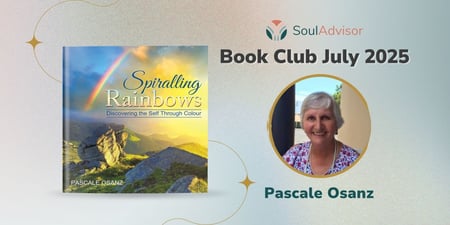
Pascale Osanz on the Hidden Influence of Color

Connect with Your Ancestors with Hazel Volk
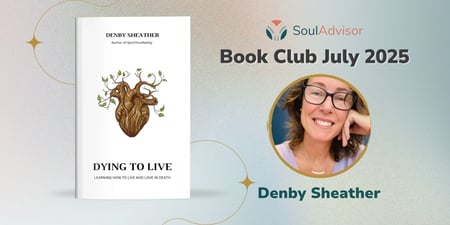
Denby Sheather on How to Live and Love in Death
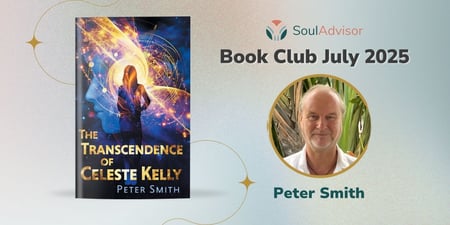
Peter Smith's Spiritual Approach to Storytelling